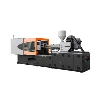
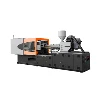
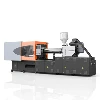
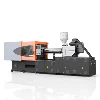
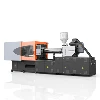
The working principle of an injection molding machine is similar to that of a syringe. It uses the thrust of a screw (or plunger) to inject pre-plasticized molten plastic (i.e., a viscous flow state) into a closed mold cavity. After solidification, the finished product is obtained.
Injection molding is a cyclical process. Each cycle mainly includes: metered feeding-melting and plasticizing-pressure injection-mold filling and cooling-mold opening and part removal. After the plastic part is removed, the mold is closed again, and the next cycle begins.
Injection Molding Machine Operation Items: Injection molding machine operation items include three aspects: control keyboard operation, electrical control system operation, and hydraulic system operation. These include selecting injection process actions, feeding actions, injection pressure, injection speed, ejection type, monitoring the temperature of each section of the barrel, and adjusting the injection pressure and back pressure.
The general molding process of a screw-type injection molding machine is as follows: First, granular or powdered plastic is added to the barrel. The plastic is molten through the rotation of the screw and the heating of the barrel's outer wall. Then, the machine closes the mold and moves the injection unit forward, bringing the nozzle close to the mold's sprue. Next, pressurized oil is introduced into the injection cylinder, propelling the screw forward and injecting the molten material into the cooler, closed mold at high pressure and speed. After a certain period of time and pressure holding (also known as holding pressure) and cooling, the material solidifies and is then removed from the mold. (The purpose of holding pressure is to prevent backflow of molten material in the mold cavity, replenish material into the cavity, and ensure the product has a certain density and dimensional tolerance.) The basic requirements of injection molding are plasticization, injection, and molding.
Plasticization is a prerequisite for achieving and ensuring the quality of the molded product. To meet the molding requirements, the injection must ensure sufficient pressure and speed. Simultaneously, due to the high injection pressure, a correspondingly high pressure is generated in the mold cavity (the average pressure in the mold cavity is generally between 20 and 45 MPa), therefore, a sufficiently large clamping force is necessary.
Therefore, the injection unit and mold clamping unit are key components of an injection molding machine.
The evaluation of plastic products mainly involves three aspects: first, appearance quality, including integrity, color, and gloss; second, the accuracy of dimensions and relative positions; and third, physical, chemical, and electrical properties appropriate for the intended use. These quality requirements vary depending on the application of the product. Defects in the product mainly stem from issues with mold design, manufacturing precision, and wear. However, in reality, technicians in plastic processing plants often struggle with the limited effectiveness of using process methods to compensate for mold defects.
Adjusting the process during production is essential for improving product quality and output. Because the injection molding cycle is very short, poor process control can lead to a continuous stream of defective products. When adjusting the process, it is best to change only one condition at a time, observing the changes repeatedly. Adjusting pressure, temperature, and time all at once can easily cause confusion and misunderstanding, making it difficult to understand the cause of problems. There are many measures and methods for adjusting the process.