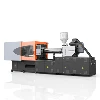
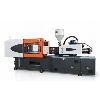
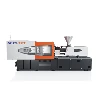
Temperature deformation of the machine can cause oil viscosity to decrease, rubber seals to deform, and oil oxidation and deterioration to accelerate. It can also reduce the air pressure component.
1. Thermal Deformation of the Machine: Moving parts with different coefficients of thermal expansion in hydraulic components may jam due to reduced clearance, causing malfunctions, affecting the transmission accuracy of the hydraulic system, and leading to poor component performance.
2. Decreased Oil Viscosity: Excessive temperature rise in the injection molding machine will cause the oil viscosity to decrease, increasing leakage and significantly reducing the volumetric efficiency of the pump and the efficiency of the entire system. Due to the decreased oil viscosity, the oil film on moving parts such as valves becomes thinner and is broken, increasing frictional resistance and accelerating wear.
3. Deformation of Rubber Seals: Excessive temperature rise in the injection molding machine will deform rubber seals, accelerating aging and failure, reducing sealing performance and service life, and causing leakage.
4. Accelerated Oil Oxidation and Deterioration: Excessive temperature rise in the injection molding machine will accelerate oil oxidation and deterioration, causing the precipitation of asphalt substances and reducing the service life of the hydraulic oil. Precipitated substances can clog damping orifices and slit valve ports, causing pressure valves to seize and malfunction, metal pipes to elongate and bend, and even rupture.
5. Deterioration in Component Performance: Excessive temperature rise in injection molding machines can lead to deterioration in component performance. Dissolved air in the oil can escape, creating cavitation and reducing the performance of the hydraulic system. The ideal operating temperature for a hydraulic system is between 45 and 50 degrees Celsius. This is because hydraulic systems are designed based on a selected pressure oil viscosity, but viscosity varies with oil temperature, affecting working components such as cylinders and hydraulic valves, reducing control accuracy and response sensitivity, especially in precision injection molding machines. High temperatures also accelerate the aging of seals, causing them to harden and crack; low temperatures result in high processing energy consumption and reduced operating speed. Therefore, close monitoring of the hydraulic oil's operating temperature is essential. The causes of excessive oil temperature are varied, but are often attributed to oil circuit malfunctions or cooling system failures.