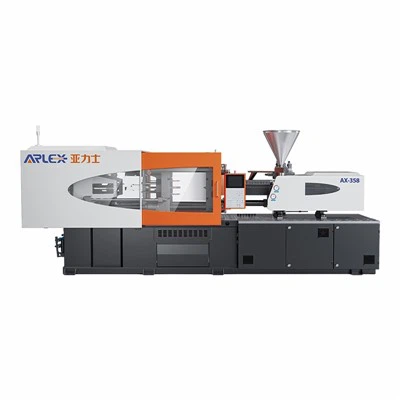
In the dynamic landscape of modern manufacturing, the pursuit of enhanced production efficiency is a constant endeavor. One technology that has emerged as a game-changer in the injection molding industry is the injection molding robot. As a dedicated supplier of these advanced machines, I've witnessed firsthand the transformative impact they can have on production processes. In this blog, we'll explore whether an injection molding robot can truly improve production efficiency.
The Basics of Injection Molding and the Role of Robots
Injection molding is a widely used manufacturing process for producing parts by injecting molten material into a mold. It's a highly efficient method for mass-producing plastic and other materials, but it also comes with its own set of challenges. Traditional injection molding processes often rely on manual labor for tasks such as part removal, quality inspection, and secondary operations. This can lead to inconsistencies in production, longer cycle times, and increased labor costs.
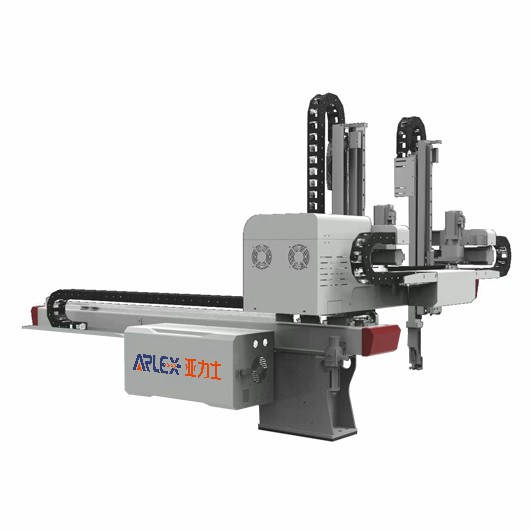
This is where injection molding robots come in. These automated machines are designed to perform a variety of tasks in the injection molding process, from removing finished parts from the mold to performing quality checks and even assembling components. By automating these tasks, injection molding robots can significantly improve production efficiency in several ways.
Precision and Consistency
One of the key advantages of using an injection molding robot is its ability to perform tasks with a high degree of precision and consistency. Unlike human operators, robots are not subject to fatigue, distractions, or variations in performance. They can repeat the same task over and over again with the exact same level of accuracy, ensuring that each part produced meets the required specifications.
For example, when removing parts from the mold, a robot can precisely grip the part and remove it without causing any damage. This reduces the risk of defective parts and improves the overall quality of the production. In addition, robots can be programmed to perform quality inspections, such as checking for dimensions, surface finish, and other critical parameters. By detecting defects early in the production process, robots can help prevent costly rework and scrap.
Increased Cycle Times
Another significant benefit of using an injection molding robot is the ability to increase cycle times. Robots can perform tasks much faster than human operators, which means that more parts can be produced in a given amount of time. This is especially important in high-volume production environments, where every second counts.
For instance, a robot can remove a part from the mold and place it on a conveyor belt in a matter of seconds, allowing the mold to be closed and the next cycle to begin immediately. This reduces the overall cycle time and increases the production output. In addition, robots can be programmed to perform multiple tasks simultaneously, further optimizing the production process.

Reduced Labor Costs
Injection molding robots can also help reduce labor costs. By automating tasks that were previously performed by human operators, companies can reduce the number of workers required on the production line. This not only saves on labor costs but also reduces the risk of human error and injuries.
For example, instead of having multiple workers manually removing parts from the mold, a single robot can perform the task more efficiently and accurately. This frees up workers to focus on other tasks, such as quality control or machine maintenance. In addition, robots can work around the clock without breaks, which means that production can continue 24/7, further increasing the overall production output.
Flexibility and Adaptability
Injection molding robots are highly flexible and adaptable machines. They can be programmed to perform a variety of tasks, depending on the specific requirements of the production process. This means that they can be easily integrated into existing production lines or used to create new, customized manufacturing solutions.
For example, a robot can be programmed to perform different types of part removal, depending on the shape and size of the part. It can also be equipped with different types of end effectors, such as grippers or suction cups, to handle different materials and parts. In addition, robots can be easily reprogrammed to adapt to changes in the production process, such as new part designs or production requirements.
Our Injection Molding Robot Solutions
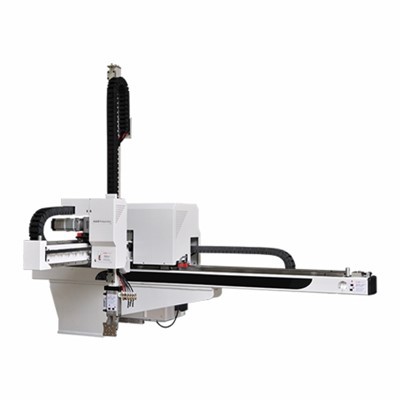
As a leading supplier of injection molding robots, we offer a wide range of solutions to meet the diverse needs of our customers. Our Injection Molding Robot is designed to provide high-performance, reliable, and cost-effective automation solutions for the injection molding industry.
We offer 3-Axis Servo Robot and 5-Axis Servo Robot options, which provide different levels of flexibility and precision. Our robots are equipped with advanced control systems and sensors, which allow them to perform tasks with a high degree of accuracy and efficiency.
In addition, we offer a range of services, including installation, training, and maintenance, to ensure that our customers get the most out of their injection molding robots. Our team of experienced engineers and technicians is available to provide support and assistance at every stage of the process, from initial consultation to ongoing maintenance and support.
Conclusion
In conclusion, an injection molding robot can significantly improve production efficiency in the injection molding industry. By providing precision, consistency, increased cycle times, reduced labor costs, and flexibility, these machines can help companies stay competitive in today's fast-paced manufacturing environment.
If you're interested in learning more about our injection molding robot solutions or discussing how we can help you improve your production efficiency, please don't hesitate to contact us. We'd be happy to provide you with more information and answer any questions you may have.
References
- "Injection Molding Handbook" by O. Olajide and A. A. Adewale
- "Automation in Manufacturing: Principles, Practice, and Control" by David A. Dornfeld