Hey there! As a hopper dryer supplier, I've seen firsthand how the dew point plays a crucial role in the drying quality of these machines. In this blog, I'm gonna break down what the dew point is, how it affects hopper dryer performance, and why it matters for your drying needs.
First off, let's talk about what the dew point actually is. Simply put, the dew point is the temperature at which air becomes saturated with water vapor and starts to condense. When the air cools below the dew point, moisture in the air turns into liquid water, which can cause all sorts of problems in a hopper dryer.
Now, you might be wondering why the dew point is so important for hopper dryers. Well, hopper dryers are designed to remove moisture from plastic pellets before they're processed. If the dew point of the air inside the dryer is too high, the pellets won't dry properly, which can lead to all sorts of issues down the line. For example, if the pellets aren't dry enough, they might not melt evenly during the injection molding process, which can result in defective parts.
So, how does the dew point affect the drying quality of a hopper dryer? Let's take a closer look.
The Impact of High Dew Points
When the dew point is high, the air inside the hopper dryer contains a lot of moisture. This means that the dryer has to work harder to remove the moisture from the pellets. If the dryer can't keep up, the pellets won't dry properly, and you'll end up with a batch of wet or damp pellets.
One of the biggest problems with high dew points is that they can cause the pellets to clump together. When the pellets are wet, they stick to each other, which can make it difficult to feed them into the injection molding machine. This can lead to jams and other issues, which can slow down production and increase costs.
Another issue with high dew points is that they can cause the pellets to absorb more moisture from the air. This means that even if the dryer manages to remove some of the moisture from the pellets, they'll quickly absorb more moisture once they're exposed to the air outside the dryer. This can make it difficult to maintain a consistent moisture level in the pellets, which can affect the quality of the final product.


The Benefits of Low Dew Points
On the other hand, when the dew point is low, the air inside the hopper dryer contains very little moisture. This means that the dryer can remove the moisture from the pellets more easily, which results in a faster and more efficient drying process.
One of the biggest benefits of low dew points is that they help to prevent the pellets from clumping together. When the pellets are dry, they're less likely to stick to each other, which makes it easier to feed them into the injection molding machine. This can help to improve production efficiency and reduce the risk of jams and other issues.
Another benefit of low dew points is that they help to maintain a consistent moisture level in the pellets. When the pellets are dry, they're less likely to absorb moisture from the air, which means that they'll stay dry for longer. This can help to improve the quality of the final product and reduce the risk of defects.
How to Control the Dew Point in a Hopper Dryer
So, how can you control the dew point in a hopper dryer? There are a few different methods that you can use, depending on your specific needs and the type of hopper dryer that you're using.
One of the most common methods is to use a dehumidifier. A dehumidifier works by removing moisture from the air inside the hopper dryer, which helps to lower the dew point. There are a few different types of dehumidifiers available, including desiccant dehumidifiers and refrigerated dehumidifiers.
Desiccant dehumidifiers use a desiccant material, such as silica gel, to absorb moisture from the air. The desiccant material is then regenerated by heating it, which releases the moisture and allows it to be removed from the dryer. Refrigerated dehumidifiers, on the other hand, use a refrigeration system to cool the air and condense the moisture. The condensed moisture is then removed from the dryer.
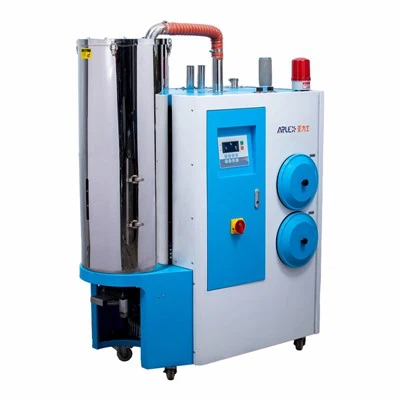
Another method that you can use to control the dew point in a hopper dryer is to use a combination of drying, dehumidifying, and conveying. This involves using a dryer to remove the moisture from the pellets, a dehumidifier to lower the dew point of the air inside the dryer, and a conveyor to transport the pellets to the injection molding machine.
Choosing the Right Hopper Dryer for Your Needs
When it comes to choosing a hopper dryer, there are a few different factors that you need to consider. One of the most important factors is the dew point of the air inside the dryer. You want to choose a hopper dryer that can maintain a low dew point, which will help to ensure that your pellets dry properly and that the final product is of high quality.
Another factor that you need to consider is the size and capacity of the hopper dryer. You want to choose a hopper dryer that is large enough to handle the amount of pellets that you need to dry, but not so large that it's inefficient or expensive to operate.
Finally, you want to choose a hopper dryer that is easy to operate and maintain. Look for a hopper dryer that has a user-friendly interface and that is easy to clean and service.
Conclusion
In conclusion, the dew point plays a crucial role in the drying quality of a hopper dryer. When the dew point is high, the dryer has to work harder to remove the moisture from the pellets, which can lead to all sorts of issues. On the other hand, when the dew point is low, the dryer can remove the moisture from the pellets more easily, which results in a faster and more efficient drying process.
As a hopper dryer supplier, I recommend using a dehumidifier or a combination of drying, dehumidifying, and conveying to control the dew point in your hopper dryer. This will help to ensure that your pellets dry properly and that the final product is of high quality.
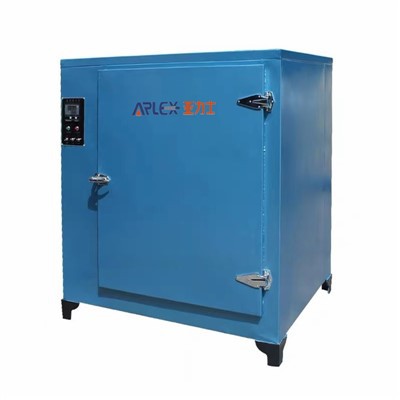
If you're in the market for a hopper dryer, I encourage you to check out our Cabinet Dryer, Dehumidifying Dryer, or Combination Of Drying, Dehumidifying and Conveying options. We offer a wide range of hopper dryers to meet your specific needs and budget.
If you have any questions or would like to learn more about our hopper dryers, please don't hesitate to contact us. We're here to help you find the right hopper dryer for your needs and to ensure that you get the best possible drying results.
References
- ASHRAE Handbook - Fundamentals. American Society of Heating, Refrigerating and Air-Conditioning Engineers.
- Plastics Processing Handbook. Hanser Publishers.