

How to Choose the Right Injection Capacity and Screw Diameter
Injection capacity and screw diameter are two important factors when selecting an injection moulding machine. The correct combination helps ensure sufficient shot volume, stable injection performance and consistent product quality.
If the injection capacity is too small, the machine may not be able to fill the mould properly. If the screw diameter is not suitable for the product and material, it may affect injection speed, pressure, plasticizing performance and production efficiency.
This guide explains the key considerations and practical steps for selecting an injection unit based on product weight, material properties, mould design and production requirements.
1. Understand Injection Capacity
Injection capacity refers to the amount of molten plastic that an injection unit can deliver in one injection cycle. It is commonly specified as:
These two specifications describe injection capacity in different ways.
It is important to understand that the injection weight shown in a machine specification is often based on PS. Different plastic materials have different densities and processing characteristics, so the actual usable shot weight may differ. When comparing machines, always check whether the stated injection weight is PS-equivalent or based on another material.
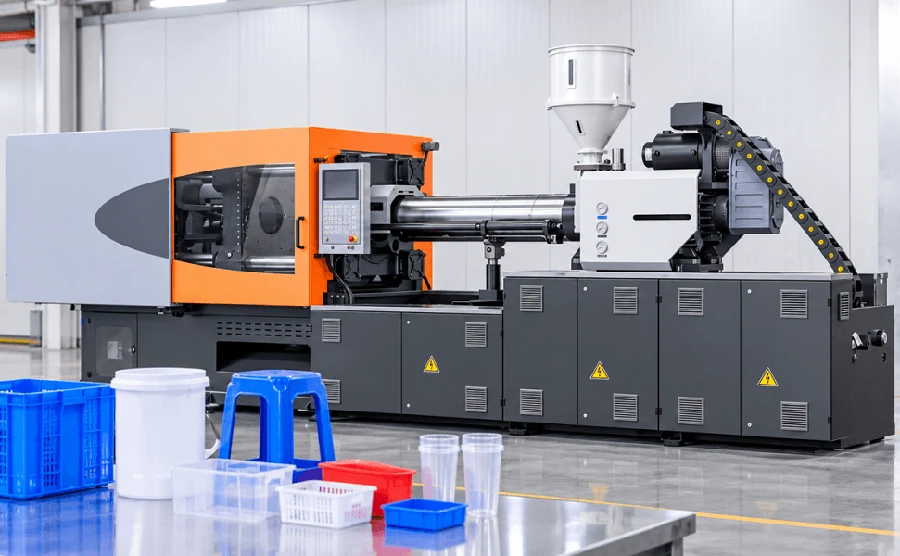
2. Calculate the Required Shot Weight
Before selecting a machine, estimate the total amount of material required for one injection cycle.
• Part weight: 80 g
• Number of cavities: 2
• Runner weight: 30 g
• Total shot weight: 80 × 2 + 30 = 190 g
This means the injection unit must be capable of delivering approximately 190 g of the selected material per cycle. The calculation should use the actual material weight, not automatically the PS-equivalent value in the machine specification.
Allow for a Suitable Injection Capacity
The machine should have enough rated capacity to handle the required shot size while keeping the actual shot within the manufacturer's recommended operating range.
Avoid selecting a machine that operates continuously at the extreme limit of its injection stroke. Also avoid an injection unit that is excessively large for the required shot, as this may affect residence time and process control.
The appropriate shot utilization depends on the machine design, screw configuration, material and application. Confirm the recommended operating range with the machine manufacturer.
3. Understand the Role of Screw Diameter

The screw is responsible for conveying, melting, mixing and injecting plastic material into the mould. Screw diameter affects several important injection-unit characteristics:
A larger screw generally displaces more material for the same screw travel. However, a larger diameter does not automatically mean better injection performance.
The selected diameter must match the required shot size, material and moulding process.
4. How Screw Diameter Affects Injection Performance
Injection Volume
A larger screw diameter displaces more material per millimetre of forward movement. Useful for larger shot volumes, but stroke and rated capacity must be considered.
Injection Pressure
Pressure depends on drive design and screw diameter. Smaller screws provide higher specific pressure, while larger screws offer greater displacement.
Injection Speed
Related to forward movement and displaced volume. High-speed filling for thin walls requires evaluating screw diameter, drive capability, and system performance.
Plasticizing Performance
Diameter and geometry influence melt capacity. The correct screw provides sufficient melting and mixing for the cycle time without excessive residence time.
5. Match Screw Diameter to the Plastic Material
Different materials have different flow characteristics, processing temperatures and wear requirements. The screw and barrel configuration should therefore be selected according to the actual resin and production conditions.
A standard screw should not automatically be assumed suitable for every material.

6. Practical Factors to Consider Before Choosing
Before confirming an injection unit, review the following information:
7. Common Mistakes When Selecting Injection Capacity and Screw Diameter
Total shot weight must include all cavities and runners. Material differences must also be considered against PS-equivalent ratings.
A larger unit is not automatically better. An excessively large screw may result in poor shot utilization or long residence time.
Screw geometry, L/D ratio, compression ratio, material compatibility and wear resistance are equally important.
Plasticizing capacity must support cooling cycles, and different resins require specific screw/barrel designs.
8. Get Help Selecting the Right Injection Unit
Selecting the correct injection capacity and screw diameter requires an evaluation of the product, material, mould and production process.
ARLEX can help assess the injection unit configuration based on your application requirements.
Our team can review the information and help evaluate a suitable machine model, injection capacity and screw configuration.
Related Guides
Explore more technical guides for injection moulding machine selection.