



Reinforced cast iron construction and advanced closed-loop control ensure smooth rotation, accurate positioning, stable operation, and extended mold service life.
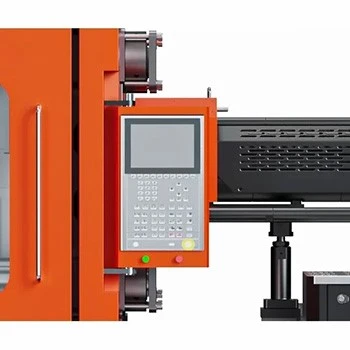
High-performance controller with synchronized communication, remote monitoring, precise positioning, and integrated system management for stable, accurate, and efficient multi-component molding.

Modular injection configurations, specialized screw technology, dual-cylinder balancing, and adaptive temperature control ensure maximum flexibility, precision, and reliable molding performance.
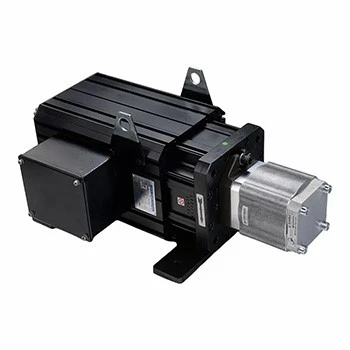
High-precision closed-loop servo control delivers accurate flow and pressure regulation, stable molding performance, and up to 80% energy savings.

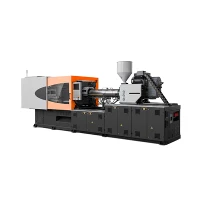
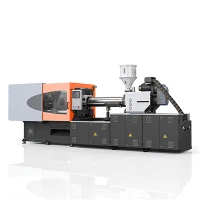
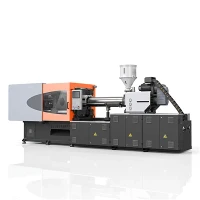
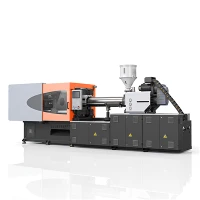


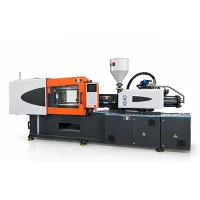
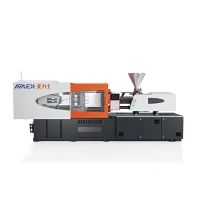
Optical Frame Injection Moulding Machine
Optical Frame Injection Moulding Machine
Precision Injection Moulding Solutions for Plastic Eyeglass Frames and Eyewear Components
Optical frames are not simply general plastic parts. A frame can combine thin sections, curved profiles, fine details and highly visible cosmetic surfaces in one moulded component. Small variations in filling, clamping, cooling or mould alignment can lead to flash, flow marks, weld lines, warpage or dimensional differences that become visible after assembly.
ARLEX Optical Frame Injection Moulding Machines are engineered specifically for manufacturers who require extreme dimensional stability, high repeat precision, and flawless cosmetic surface finishes for plastic optical frames, temples, and precision eyewear components.


Key Technical Features for Precision Eyewear Manufacturing

1. Ultra-Precise Injection Velocity and Pressure Profile
Achieving defect-free thin-wall frame sections requires high-response injection dynamics and exact switching points.
Multi-Stage Injection Control: Up to 10-stage injection speed and pressure profiling prevents stress marks near the gate and short shots in thin frame edges.
High Repeatability: Injection position control accuracy within ±0.01 mm ensures consistent shot-to-shot weight, reducing frame dimensional variance.
Low-Stress Moulding: Precise back-pressure and screw speed control protect sensitive polymers (such as TR90 or PC) from thermal degradation and shear degradation during plasticizing.
2. High-Rigidity Clamping System for Zero-Flash Parting Lines
Flash along parting lines leads to high manual deflashing and polishing costs. ARLEX clamping systems feature engineered platen rigidity to distribute clamping forces evenly across the entire mould surface.
Optimized Platen Stiffness: Minimizes platen deflection under high injection pressures, preventing micro-gaps at the parting line.
Low-Pressure Mould Protection: Ultra-sensitive mould protection guards complex inserts, sliders, and fine core pins against damage during closing.
Balanced Tie-Bar Loading: Ensures uniform clamping stress across multi-cavity eyewear moulds.
3. Material-Specific Screw and Barrel Assemblies
Eyewear engineering plastics react differently to heat, shear, and moisture. ARLEX offers specialized screw geometries engineered for specific optical resins:
Polycarbonate (PC): Specialized low-shear, wear-resistant screw geometry prevents yellowing, black spots, and optical distortions.
Polyamide / Nylon (PA12, PA66): Optimized compression ratio ensures homogeneous melting without thermal degradation. (Note: Proper resin drying down to moisture levels under 0.05% is required before processing).
TR90 (Memory Plastics): Precision thermal management prevents material degradation while maintaining flexibility and impact strength.
PMMA / ABS / Engineering Blends: Custom barrier or mixing screw designs to ensure uniform color dispersion.
4. Multi-Zone Precision Barrel Temperature Control
Surface aesthetics require strict melt-temperature consistency. ARLEX machines feature independent PID multi-zone temperature modules with an accuracy of ±1°C along the barrel, preventing localized overheating and resin degradation.
5. High-Efficiency Servo-Hydraulic Drive System
Equipped with premium servo motors and internal gear pumps (Sumitomo/Eckerle), the ARLEX drive system delivers power on demand.
Energy Savings: Reduces energy consumption by 30% to 60% compared to traditional fixed-displacement pump systems, depending on the cycle time and cooling parameters.
Proportional Hydraulic Response: Ensures smooth, vibration-free movements during mould opening, ejection, and core pulling.

Technical Specifications
|
Parameter |
Configuration Range / Selection Basis |
|
Machine Type |
Precision Optical Frame Injection Moulding Machine |
|
Target Application |
Eyeglass Frames, Temples, Sunwear Frames, Precision Eyewear Components |
|
Clamping Force |
Configured based on projected part area, material viscosity, and cavity count |
|
Shot Volume / Weight |
Sized to match 30%–70% of total barrel capacity for optimal melt residence time |
|
Screw Diameters |
A / B / C options per model, selected according to resin shear sensitivity |
|
Temperature Control |
PID multi-zone control (±1°C accuracy) |
|
Injection Profile |
Multi-stage closed-loop / high-response system |
|
Platen Dimensions |
Designed for multi-cavity optical frame moulds and hot runner manifolds |
|
Ejection System |
Multi-point hydraulic / mechanical ejection with speed and force profiling |
|
Drive System |
Advanced Servo-Hydraulic System (Sumitomo / Eckerle / Rexroth components) |
|
Control System |
Professional Techmation / Gefran industrial controller with multi-language HMI |
Eyewear Defects vs. ARLEX Machine Solutions
|
Moulding Defect |
Common Root Causes |
ARLEX Machine & Process Solution |
|
Flash on Parting Lines |
Insufficient clamp force, platen deflection |
High-rigidity platen design and balanced tie-bar strain control |
|
Weld Lines / Flow Marks |
Low injection speed, uneven flow front |
Multi-stage high-speed injection profiling and precise temperature control |
|
Short Shots (Unfilled Sections) |
Insufficient filling pressure, cold melt |
High-pressure injection control and multi-zone precise barrel heating |
|
Sink Marks & Warpage |
Poor holding pressure, uneven cooling |
Closed-loop holding pressure control and dynamic timing accuracy |
|
Black Spots / Degradation |
Shear overheating, dead spots in barrel |
Material-dedicated low-shear screw profile and polished inner barrel walls |
|
Color Inconsistency |
Inadequate color dispersion in screw |
Custom mixing screw profiles designed for masterbatch blending |

Optical frames are not standard industrial plastic parts. A single frame incorporates ultra-thin sections, complex curved profiles, fine hinge geometries, and highly visible cosmetic surfaces. Minor process fluctuations in melt temperature, cavity filling, or clamping force directly result in visible defects like flash, flow lines, weld marks, or post-assembly warpage.
Choosing an injection moulding machine based solely on nominal clamping tonnage often leads to high scrap rates. ARLEX uses an engineering-first, application-driven approach: we match machine kinematics, screw design, injection dynamics, and clamping force directly to your specific resin, mould geometry, and production output targets.
[ Your Frame Profile & Resin Grade ]
│
▼
[ Mould Geometry & Cavity Layout ]
│
▼
[ Precision Screw & Barrel Selection ]
│
▼
[ Configured ARLEX Machine ]
Premium Tier Component Sourcing
To guarantee uninterrupted 24/7 continuous industrial operation, ARLEX integrates verified components from global industry leaders:
Control Systems: Techmation / Gefran (Precision process control and intuitive parameter management)
Hydraulic Valves: Bosch Rexroth / Yuken (Rapid response, high repeatability)
Pump Systems: Sumitomo / Eckerle (Low noise, high efficiency, stable pressure output)
Electrical System: Schneider Electric (Industrial-grade protection and reliability)
Linear Bearings & Guide Rails: NSK / THK (Smooth movement, minimum friction)
Hydraulic Seals: Hallite / NOK (High-pressure wear resistance, zero leakage)
Machine Selection & Quotation Checklist
To receive an accurate machine recommendation and custom quotation, please prepare the following parameters for our application engineers:
Part Information
- Frame / component 2D or 3D drawings (STEP / IGES format)
- Individual part weight and wall thickness variations
- Resin type and exact brand/grade (e.g., EMS TR90, Covestro PC)
- Surface cosmetic finish requirements (e.g., clear optical, high gloss, painted)
Mould Information
- Mould dimensions (Width * Length * Height) and total mould weight
- Number of cavities (e.g., 1+1, 2, 4)
- Runner system details (Cold runner / Hot runner valve gate)
- Tie-bar clearance requirements
Output & Automation Requirements
- Target monthly or annual production volume
- Preferred take-out method (Manual / 3-Axis Servo Robot)
- Local factory power supply specifications (e.g., 380V / 50Hz / 3Phase)

FAQ