

Injection Moulding Machines for PET Preform Production
PET preforms are the starting point of many plastic bottle manufacturing processes. Their weight, neck finish, wall distribution, and material properties directly influence the quality and performance of the final bottle after stretch blow moulding.
Producing consistent PET preforms requires more than sufficient injection capacity. Resin preparation, plasticising performance, multi-cavity mould design, cooling efficiency, and automated take-out must work together to achieve the required output and product quality.
ARLEX provides PET injection moulding machine solutions for different preform sizes and production requirements. Machine selection is evaluated according to preform specifications, mould configuration, resin consumption, target cycle time, and the complete production setup.
1. PET Preform Applications
PET preforms are used in different packaging industries. Their weight, neck design, dimensions, and material requirements vary according to the final bottle application.
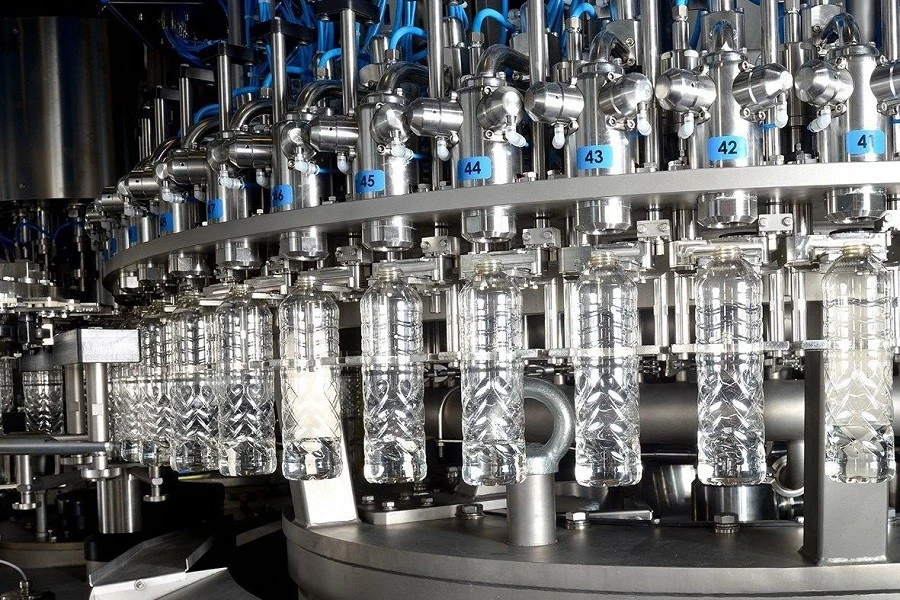
Water and Beverage Bottle Preforms
Common applications include:
- Drinking water bottles
- Carbonated soft drink (CSD) bottles
- Juice bottles
- Flavoured water and beverage containers
Production considerations:
- Consistent preform weight and dimensions
- Accurate neck finish for cap compatibility
- Uniform wall distribution
- Stable transparency and appearance
- Consistent cooling across all cavities
- Repeatable preform quality for downstream stretch blow moulding
High-cavity moulds are commonly used for large-volume beverage preform production. The injection unit, clamping unit, mould, and cooling system must be matched to the required cycle and output.
Edible Oil and Household Bottle Preforms
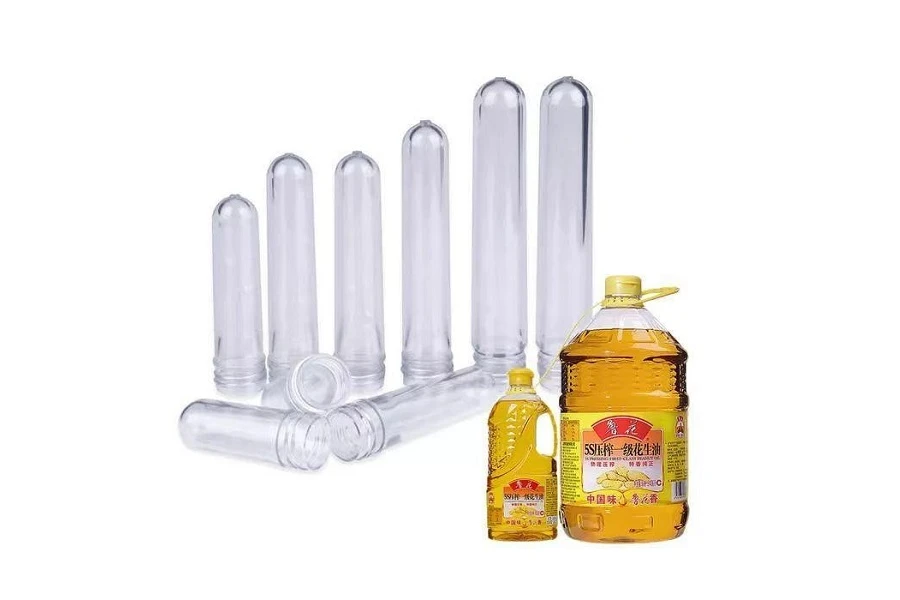
Typical applications include:
- Cooking oil bottles
- Household cleaning product bottles
- Detergent packaging
- Personal care containers
Production considerations:
- Preform weight matched to bottle capacity and design
- Suitable injection capacity for heavier shots
- Adequate plasticising recovery
- Consistent wall thickness and material distribution
- Appropriate mould cooling for the preform geometry
Depending on bottle design, these preforms may require different weights, neck finishes, and mould configurations from standard water bottle preforms.
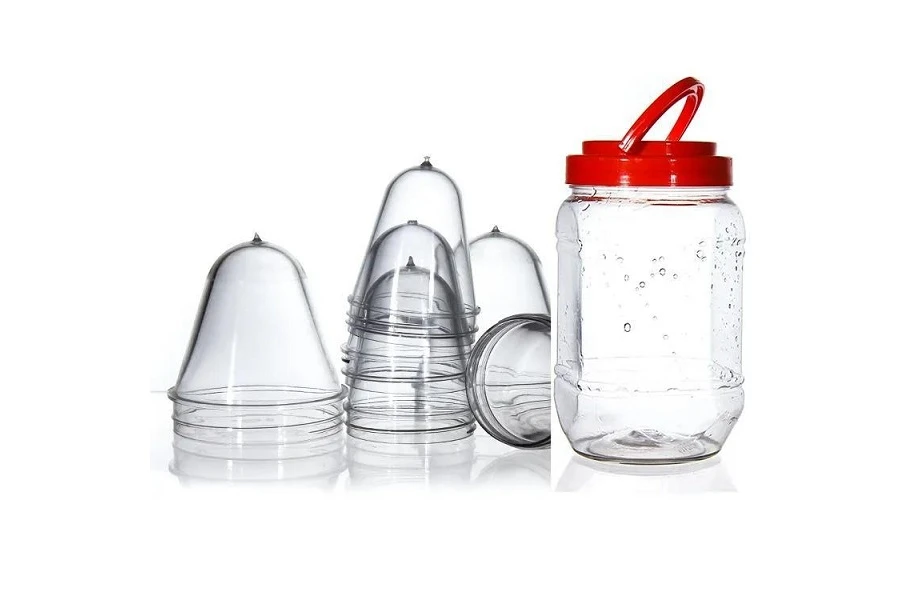
Wide-Mouth and Food Container Preforms
Typical applications include:
- Food storage jars
- Wide-mouth beverage containers
- Confectionery packaging
- Nutritional and supplement containers
Production considerations:
- Larger neck and opening dimensions
- Mould layout and cavity arrangement
- Suitable platen dimensions and tie-bar clearance
- Preform removal and handling space
- Consistent neck dimensions and sealing surfaces
Wide-mouth preforms may require specialised mould structures. The machine should be selected according to the complete mould dimensions and injection requirements.
Cosmetics and Personal Care Bottle Preforms
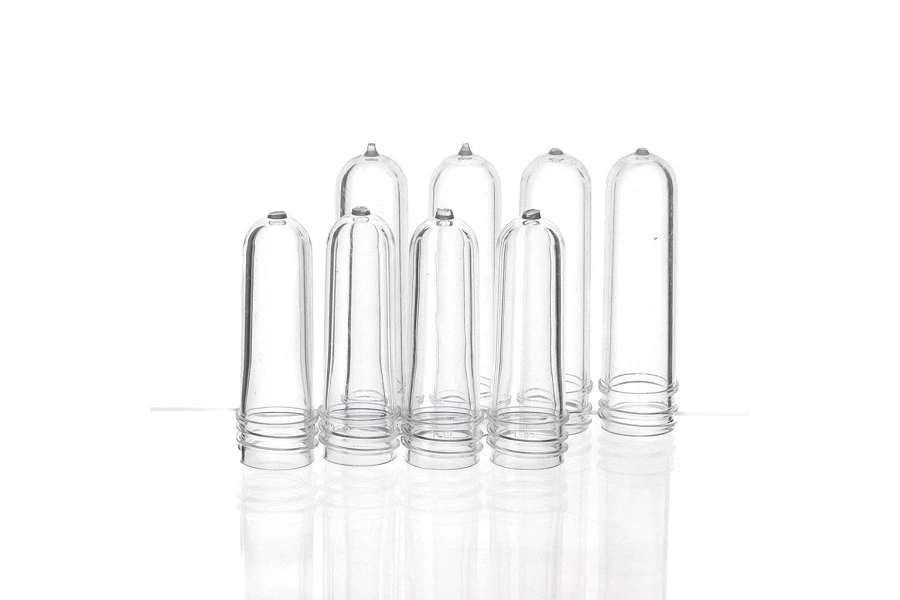
Typical applications include:
- Shampoo and conditioner bottles
- Skincare packaging
- Lotion containers
- Personal care packaging
Production considerations:
- Consistent surface appearance
- Controlled material processing
- Accurate neck and thread dimensions
- Suitable preform weight and wall distribution
- Stable moulding conditions for repeatable quality
For premium packaging, resin selection, mould surface condition, processing parameters, and material handling all contribute to the final appearance.
2. Key Requirements for PET Preform Production
PET preform manufacturing involves several interconnected processes. A bottleneck in any stage can affect the output of the entire production line.
Resin Drying and Material Preparation
PET is moisture-sensitive during melt processing. Excessive moisture can cause hydrolytic degradation, affecting the material's intrinsic viscosity (IV) and the mechanical properties of the finished preforms.
A suitable resin preparation system should consider:
- Dehumidifying drying
- Drying temperature and residence time
- Dew point control
- Material conveying
- Prevention of moisture reabsorption
- Resin supplier's processing recommendations
The drying system should be sized according to the actual PET consumption per hour and the material supplier's recommended drying conditions.
Plasticising and Injection Performance
The injection unit must prepare and deliver the required PET melt within the production cycle.
Important considerations include:
- Total shot weight
- Number of cavities
- Preform weight
- Required injection speed and pressure
- Screw diameter and geometry
- Plasticising recovery time
- Melt temperature consistency
For multi-cavity moulds, the complete shot size must be calculated before selecting the injection unit. The screw and barrel should also be suitable for PET processing.
Multi-Cavity Mould Compatibility
PET preform production often uses multi-cavity moulds to increase output per cycle. The machine must be compatible with the mould in several areas:
- Total projected area and required clamping force
- Mould dimensions and tie-bar spacing
- Platen dimensions
- Mould height
- Opening stroke and maximum daylight
- Ejector requirements
- Total shot weight and injection capacity
A higher cavity count increases the shot size and may also affect mould dimensions, cooling requirements, and part removal. It is therefore important to evaluate the mould and machine as one system.
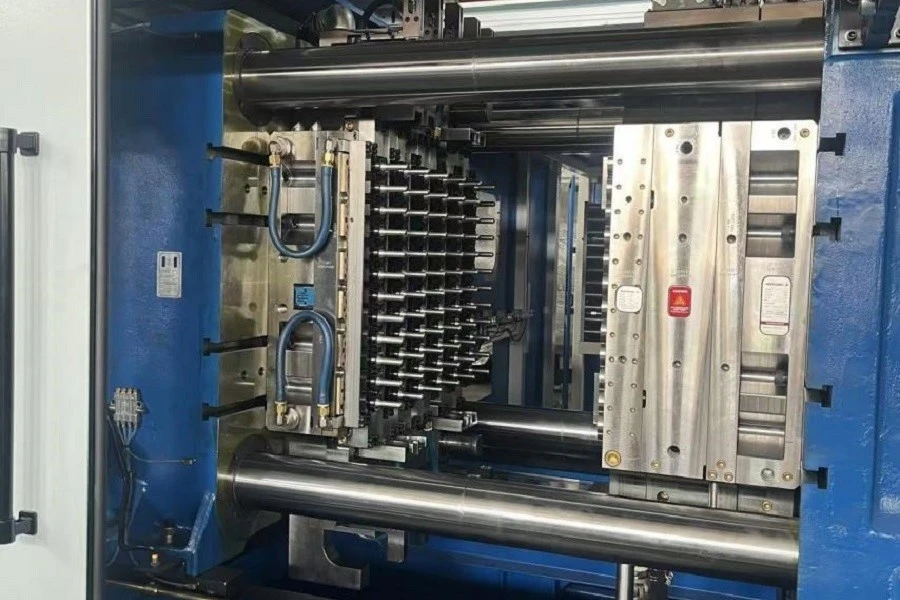
Cooling and Automated Preform Take-Out

Cooling and handling are important factors in achieving stable PET preform production. A suitable production setup may include:
- Mould cooling circuits
- Temperature-controlled cooling equipment
- Preform take-out robot
- Preform cooling and handling arrangements
- Conveyor and collection system
Cooling time depends on preform weight, wall thickness, mould design, cooling channel arrangement, and process conditions. Increasing injection speed alone does not necessarily reduce the complete production cycle.
3. How to Select the Right PET Injection Moulding Machine
Selecting a PET machine requires evaluating the preform, mould, material consumption, and production target together.
1. Confirm Preform Weight and Neck Design
Start with the preform drawing or sample, checking preform weight, length, diameter, neck finish, wall thickness, and downstream blow moulding requirements.
2. Determine the Number of Cavities and Total Shot Weight
The number of cavities directly affects material consumption per cycle. Formula:
For example, 48 cavities at 20 g each require 960 g of preform weight per shot before adding runners.
3. Match Plasticising Capacity to Cycle Time
The screw must be able to plasticise the required material quantity within the available cycle time. If recovery takes longer than other stages, it becomes the bottleneck.
4. Understanding PET Preform Production Capacity
Production capacity depends on cavity count, cycle time, preform weight, and line efficiency. Theoretical calculation formula:
For example, a 48-cavity mould running at a 12-second cycle yields a theoretical output of 14,400 preforms per hour. Actual output may be lower due to downtime, maintenance, and quality checks.
5. PET Preform Machine Configuration Considerations
Different preform projects require specific configuration reviews.
| Configuration item | What to evaluate |
|---|---|
| Clamping force | Mould projected area and cavity pressure |
| Injection capacity | Complete shot weight |
| Screw diameter | Shot size and injection performance |
| Plasticising capacity | Required material output per hour |
| Screw and barrel | PET processing suitability |
| Tie-bar spacing | Mould installation clearance |
| Opening stroke | Mould opening and preform removal |
| Cooling system | Mould cooling requirements |
| Robot system | Cavity layout and take-out arrangement |
6. Common Challenges in PET Preform Manufacturing
Moisture-Related Material Degradation
Insufficient drying or moisture reabsorption can affect PET melt quality and intrinsic viscosity. Proper material preparation is essential.
Inconsistent Preform Weight
Variation may be related to injection control, mould conditions, material preparation, or process stability. The complete moulding process should be evaluated.
Uneven Cooling
Differences in mould cooling conditions can affect preform temperature distribution, demoulding, and downstream blow-moulding performance.
Insufficient Plasticising Recovery
If the screw cannot prepare the required shot within the available cycle, production may be limited even when the machine has sufficient injection capacity.
Poor Take-Out Coordination
The robot and mould must work together within the production cycle. An unsuitable take-out arrangement may increase cycle time or cause handling problems.
7. ARLEX PET Injection Moulding Machine Solutions
ARLEX evaluates PET preform projects according to the complete manufacturing requirement rather than selecting a machine based on clamping force alone.
Our machine selection process considers:
- Preform specifications: Weight, dimensions, neck finish, and application.
- Mould configuration: Cavity count, mould dimensions, and total shot weight.
- Injection unit: Injection capacity, screw diameter, and injection performance.
- Plasticising system: PET processing requirements and material recovery time.
- Clamping unit: Required clamping force and mould compatibility.
- Production arrangement: Drying, cooling, robot take-out, and material handling.
ARLEX offers PET injection moulding machine configurations for different preform production requirements. The appropriate model and injection-unit specification should be selected according to the actual project data.
8. What Information Should You Prepare?
To evaluate your PET preform project, please provide:
Preform information
- Preform drawing or sample
- Preform weight
- Overall dimensions
- Neck finish specification
- Intended bottle application
Mould information
- Number of cavities
- Mould dimensions
- Total shot weight
- Mould weight
- Hot-runner or cold-runner configuration
Production requirements
- Target output per hour
- Required cycle time
- PET resin grade
- Material consumption
- Existing auxiliary equipment & automation
Request a PET Machine Configuration Recommendation
Planning a new PET preform production line or upgrading your existing equipment?
Send ARLEX your preform specifications, mould details, resin information, and target output. Our team can evaluate the production requirements and recommend a suitable PET injection moulding machine configuration.
Get PET Machine Configuration Recommendation