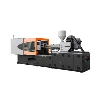
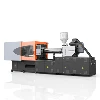
Composition: Injection molding machines typically consist of an injection system, mold clamping system, hydraulic transmission system, electrical control system, lubrication system, heating and cooling system, and safety monitoring system.
Injection System: The injection system is one of the most important components of an injection molding machine. There are generally three main types: plunger type, screw type, and screw pre-plasticizing plunger injection type. The screw type is the most widely used. Its function is to heat and plasticize a certain amount of plastic within a specified time during one cycle of the injection molding machine, and then inject the molten plastic into the mold cavity through the screw under certain pressure and speed. After injection, it maintains the shape of the molten material injected into the mold cavity.
Composition of the Injection System: The injection system consists of a plasticizing device and a power transmission device.
The plasticizing device of a screw-type injection molding machine mainly consists of a feeding device, barrel, screw, glue-coating assembly, and nozzle. The power transmission device includes the injection cylinder, the injection seat moving cylinder, and the screw drive device.
Mold Closing System:The function of the mold closing system is to ensure the mold closes, opens, and ejects the product. Simultaneously, after the mold closes, it provides sufficient clamping force to resist the cavity pressure generated by molten plastic entering the mold cavity, preventing mold gaps and resulting in defective products.
Composition of the Mold Closing System: The mold closing system mainly consists of a mold closing device, a winch, a mold adjusting mechanism, an ejection mechanism, front and rear fixed mold plates, a moving mold plate, a mold closing cylinder, and a safety protection mechanism.
Hydraulic System:The function of the hydraulic transmission system is to provide power to realize the various actions required by the injection molding machine according to the process, and to meet the pressure, speed, temperature, and other requirements of various parts of the injection molding machine. It mainly consists of various hydraulic components and hydraulic auxiliary components, among which the oil pump and motor are the power source of the injection molding machine. Various valves control the oil pressure and flow rate, thereby meeting the various requirements of the injection molding process.
Electrical Control:The electrical control system, in proper coordination with the hydraulic system, can realize the process requirements (pressure, temperature, speed, time) and various programmed actions of the injection molding machine. It mainly consists of electrical and electronic components and instruments. There are generally four control modes: manual, semi-automatic, fully automatic, and adjustable.
Heating/Cooling: The heating system is used to heat the barrel and injection nozzle. Injection molding machine barrels typically use electric heating coils as heating devices, installed on the outside of the barrel and monitored in sections by thermocouples. Heat is conducted through the barrel wall to provide a heat source for material plasticization. The cooling system is mainly used to cool the oil temperature. Excessive oil temperature can cause various malfunctions, so the oil temperature must be controlled. Another area requiring cooling is near the material outlet to prevent the raw material from melting at the outlet, which could prevent normal material feeding.
Lubrication System:The lubrication system provides lubrication to the moving platen, mold adjustment device, connecting rods, injection unit, and other parts with relative movement in the injection molding machine. This reduces energy consumption and extends part life. Lubrication can be performed manually on a regular basis or automatically by an electric lubricator.