Hey there! As a supplier of Gravimetric Blenders, I've seen firsthand how these nifty machines handle materials with different shapes. It's a pretty fascinating process, and I'm excited to share it with you.
First off, let's talk about what a Gravimetric Blender is. In simple terms, it's a device that precisely measures and blends different materials according to a set formula. This is super important in industries like plastics manufacturing, where getting the right mix of materials is crucial for the quality of the final product.
Now, when it comes to materials with different shapes, the Gravimetric Blender has to deal with a few challenges. For example, materials can come in all sorts of forms - from tiny pellets to long fibers, and everything in between. Each shape has its own unique characteristics that can affect how it flows, how it's measured, and how it blends with other materials.
Let's start with the measurement part. The Gravimetric Blender uses a weighing system to determine the exact amount of each material that needs to be added to the mix. This is where the shape of the material can make a difference. For instance, if you're dealing with irregularly shaped materials, they might not flow as smoothly as round pellets. This can lead to inconsistent measurements if the blender isn't designed to handle them properly.
Our Gravimetric Blenders are equipped with advanced sensors and algorithms that can adapt to different material shapes. They can detect any variations in the flow of the material and adjust the feeding rate accordingly. This ensures that the right amount of each material is added to the mix, regardless of its shape.
Another challenge when dealing with different material shapes is blending. You want to make sure that all the materials are evenly distributed throughout the mix. If the materials have different shapes, they might tend to separate or clump together during the blending process.
To overcome this, our Gravimetric Blenders are designed with special mixing mechanisms. For example, some models use a Screw Mixer that can effectively blend materials of different shapes. The screw rotates and moves the materials around, ensuring that they are thoroughly mixed.
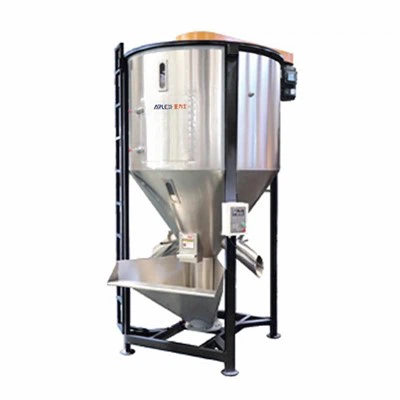
In addition to the screw mixer, we also have Vertical Plastic Mixer options. These mixers are great for handling materials with different shapes because they use a vertical mixing action that can break up clumps and ensure a more uniform blend.
Let's take a closer look at how the Gravimetric Blender handles some specific material shapes.
Pellets
Pellets are one of the most common types of materials used in the plastics industry. They are usually small, round, and easy to handle. However, even with pellets, there can be variations in size and shape. Some pellets might be slightly oval or have rough surfaces.
Our Gravimetric Blenders can handle these variations with ease. The weighing system can accurately measure the weight of the pellets, and the mixing mechanism can ensure that they are evenly distributed in the mix.
Fibers
Fibers are another type of material that can be challenging to handle. They are long and thin, and they tend to tangle together. This can make it difficult to measure the right amount of fibers and to blend them evenly with other materials.
To deal with fibers, our Gravimetric Blenders are equipped with special feeding mechanisms. These mechanisms can separate the fibers and feed them into the mixer at a controlled rate. The mixer then uses its powerful mixing action to break up any tangles and ensure that the fibers are evenly distributed in the mix.
Powders
Powders are also a common material in the plastics industry. They can be fine or coarse, and they have a tendency to stick together. This can make it difficult to measure the right amount of powder and to blend it with other materials.
Our Gravimetric Blenders are designed to handle powders effectively. They use a special feeding system that can prevent the powder from clumping and ensure a consistent flow. The mixer then uses its mixing action to break up any clumps and ensure that the powder is evenly distributed in the mix.
In conclusion, a Gravimetric Blender is a powerful tool for handling materials with different shapes. It can accurately measure and blend materials, regardless of their shape or size. Our Gravimetric Blenders are designed with advanced features and technologies that can adapt to different material shapes and ensure a high-quality mix.
If you're in the market for a Gravimetric Blender or any other injection molding auxiliary equipment, we'd love to hear from you. We can provide you with more information about our products and help you find the right solution for your needs. Just visit our Gravimetric Blender page to learn more.


References:
- Industry knowledge and experience in the field of injection molding auxiliary equipment.
- Technical specifications and research on Gravimetric Blenders and related mixing technologies.