Hey there! As a supplier of Mold Temperature Controllers, I'm super stoked to chat with you about how these nifty devices team up with the mold cooling system. It's a crucial aspect in the injection molding process, and understanding this cooperation can really up your game in the manufacturing world.
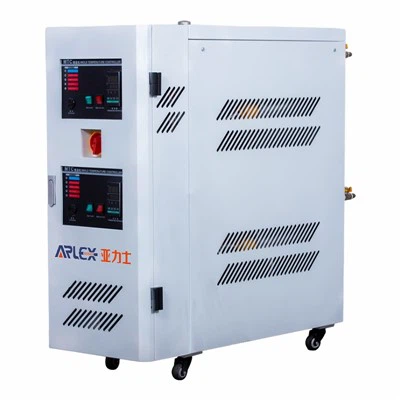
Let's start by getting a clear picture of what a Mold Temperature Controller is. In simple terms, it's a device that helps maintain a consistent temperature in the mold during the injection molding process. You can check out our Mold Temperature Controller for more details. This is important because the temperature of the mold has a huge impact on the quality of the final product. If the temperature is too high, the plastic might not cool properly, leading to warping or other defects. On the other hand, if it's too low, the plastic might solidify too quickly, causing incomplete filling of the mold.
Now, let's talk about the mold cooling system. This system is designed to remove the heat generated during the injection molding process. It usually consists of channels within the mold through which a cooling fluid, like water or oil, circulates. The cooling fluid absorbs the heat from the mold and carries it away, keeping the mold at a stable temperature.
So, how do these two work together? Well, the Mold Temperature Controller plays a key role in regulating the temperature of the cooling fluid. It monitors the temperature of the fluid and adjusts it as needed to ensure that the mold stays at the optimal temperature. For example, if the mold is getting too hot, the controller will increase the flow rate of the cooling fluid or lower its temperature. Conversely, if the mold is too cold, the controller will reduce the flow rate or raise the temperature of the fluid.
One of the cool features of our Dual Temperature Mold Temperature Controller is that it can control two different temperatures simultaneously. This is really useful in situations where different parts of the mold need to be at different temperatures. For instance, in some complex injection molding processes, the core of the mold might need to be at a different temperature than the cavity. The dual temperature controller allows you to set and maintain these different temperatures, ensuring a high-quality end product.
Another important aspect of the cooperation between the Mold Temperature Controller and the mold cooling system is the feedback loop. The controller continuously monitors the temperature of the mold and the cooling fluid. It uses this information to make real-time adjustments to the cooling process. This feedback loop ensures that the temperature of the mold remains stable throughout the injection molding process, even if there are fluctuations in the production environment.
In addition to maintaining a stable temperature, the Mold Temperature Controller also helps improve the efficiency of the mold cooling system. By optimizing the temperature of the cooling fluid, it reduces the amount of energy required to cool the mold. This not only saves on energy costs but also extends the lifespan of the mold and the cooling system.
Let's take a look at some practical examples of how this cooperation works in real-world scenarios. In a plastic injection molding factory, the Mold Temperature Controller is connected to the mold cooling system. When the injection molding process starts, the controller begins to monitor the temperature of the mold and the cooling fluid. As the plastic is injected into the mold, the temperature of the mold rises. The controller senses this increase and adjusts the flow rate and temperature of the cooling fluid to keep the mold at the desired temperature.
During the cooling phase, the controller continues to monitor the temperature. Once the plastic has solidified and the mold has cooled to the appropriate temperature, the controller can reduce the flow rate of the cooling fluid to save energy. This whole process is repeated for each injection molding cycle, ensuring consistent quality and efficiency.
Now, you might be wondering how to choose the right Mold Temperature Controller for your mold cooling system. Well, there are a few factors to consider. First, you need to think about the size and type of your mold. Larger molds or molds with complex geometries might require a more powerful controller. You also need to consider the temperature range that your mold needs to operate within. Different controllers have different temperature control capabilities, so make sure to choose one that can meet your specific requirements.
Another important factor is the accuracy of the temperature control. A high-precision controller will be able to maintain a more consistent temperature, which is crucial for producing high-quality products. Additionally, you might want to look for a controller that is easy to operate and maintain. Our controllers are designed with user-friendliness in mind, making them a great choice for both experienced operators and those new to the injection molding industry.
In conclusion, the cooperation between a Mold Temperature Controller and the mold cooling system is essential for the success of the injection molding process. By working together, these two components ensure that the mold stays at the optimal temperature, resulting in high-quality products and improved efficiency. If you're in the market for a Mold Temperature Controller, I encourage you to reach out to us. We'd be more than happy to discuss your specific needs and help you find the perfect solution for your mold cooling system. Whether you're a small-scale manufacturer or a large industrial operation, we've got the expertise and products to support you. So, don't hesitate to contact us for a consultation and let's take your injection molding process to the next level!


References
- Injection Molding Handbook, by Dominik Potente, Marcel Dekker Inc.
- Plastics Processing Technology, by O. O. Olajide, CRC Press