

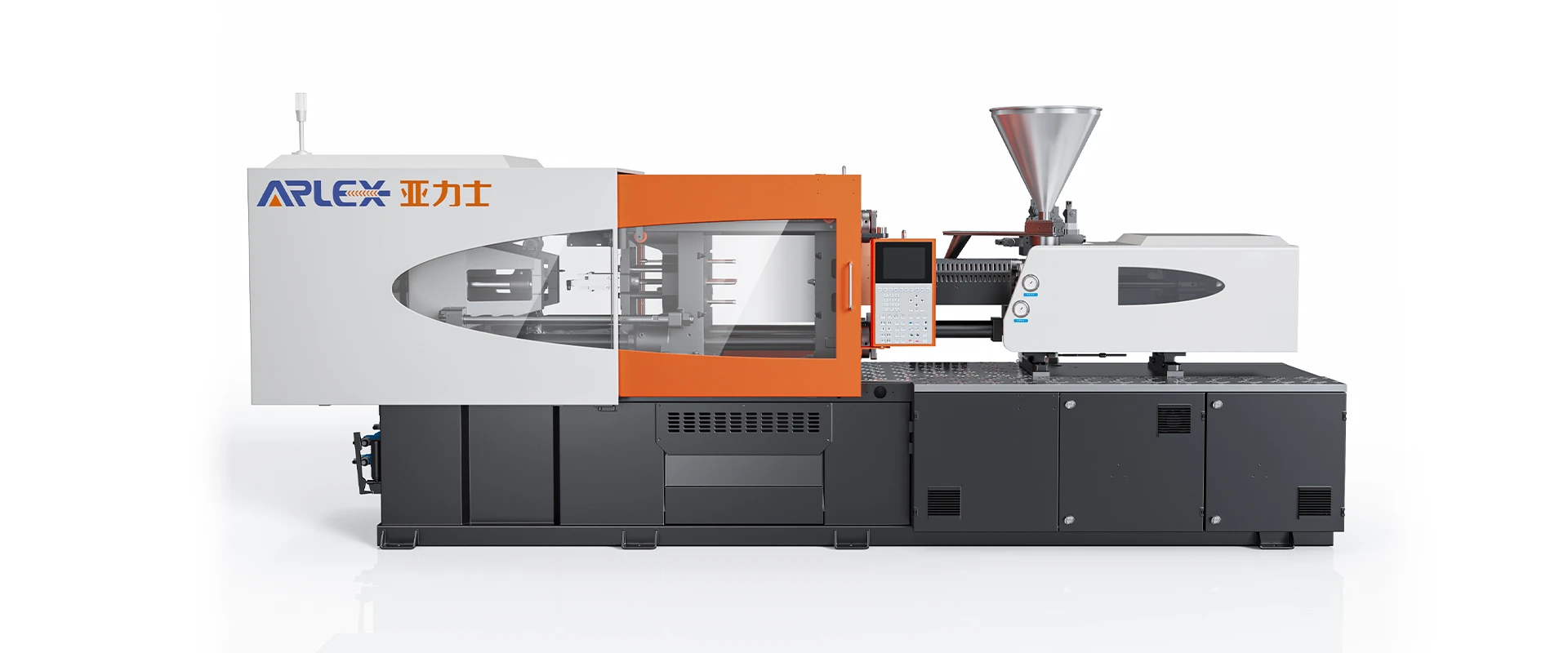

Reinforced cast iron construction and advanced closed-loop control ensure smooth rotation, accurate positioning, stable operation, and extended mold service life.
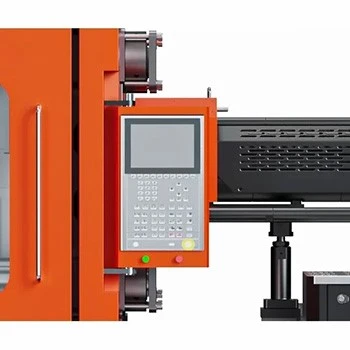
High-performance controller with synchronized communication, remote monitoring, precise positioning, and integrated system management for stable, accurate, and efficient multi-component molding.

Modular injection configurations, specialized screw technology, dual-cylinder balancing, and adaptive temperature control ensure maximum flexibility, precision, and reliable molding performance.
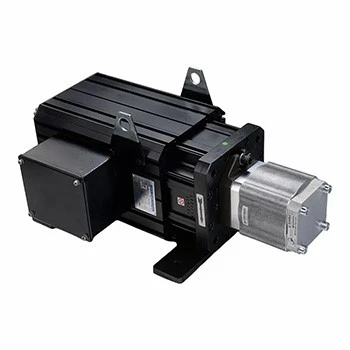
High-precision closed-loop servo control delivers accurate flow and pressure regulation, stable molding performance, and up to 80% energy savings.
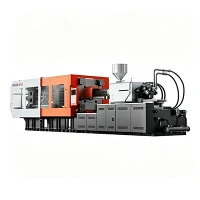
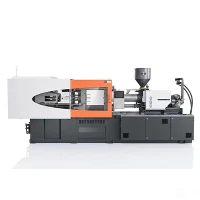
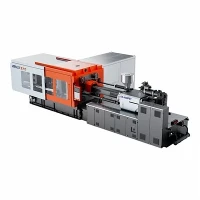
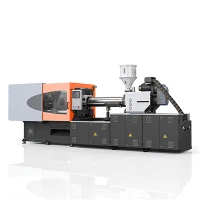


Servo-Hydraulic Deep-Draw Molding Machine
Ningbo Yalishi(Arlex) Plastic Machinery Co., Ltd. is one of the leading manufacturers and suppliers of servo-hydraulic deep-draw molding machine in China. Please feel free to wholesale advanced servo-hydraulic deep-draw molding machine made in China here from our factory.
The Servo-Hydraulic Deep-Draw Molding Machine is an injection molding machine featuring extended opening strokes, enlarged tie-bar clearance, and a servo-hydraulic drive system. Built for manufacturing medium-to-deep cavity plastic parts-such as containers, tall bins, and deep enclosures-the unit provides high-volume shot capacity and dynamic clamping rigidity to support core-pulling actuators and long ejector travels.
Servo-Hydraulic System
Servo Motor: Permanent magnet synchronous motor operating on demand-based RPM matching.
Hydraulic System: Internal gear pump coupled with manifold blocks designed to reduce internal fluid turbulence.
Closed-Loop Control: System pressure and flow feedback monitored via optical rotary encoders and pressure transducers.
Pressure Control: Multi-stage pressure modulation with proportional valve response.
Speed Control: Flow regulation achieving velocity adjustments with response times under 40 ms.
System Stability: Fluid temperature maintained within operational parameters during continuous full-load dry-cycle testing.
Clamping Unit
Clamping Force: Structural frame rated to withstand maximum rated cavity pressure without exceeding platen parallel limits.
Platen Structure: Center-press heavy-duty platen geometry distributing clamping load across the mold installation area.
Tie-Bar Spacing: Enlarged clearance between tie bars accommodating deep mold bases and side-core pull cylinder assemblies.
Mold Height: Extended daylight opening range supporting thick deep-draw tooling specifications.
Mold Installation: Machined standard T-slots and robot mounting interfaces.
Clamping Kinematics: Surface-hardened tie-bars combined with five-point toggle mechanics.
Injection Unit
Injection Speed: Multi-stage programmable velocity profiles covering variable wall-thickness filling requirements.
Injection Pressure: Peak injection holding capabilities regulating plastic density during cooling.
Injection Stroke: Extended screw stroke displacement delivering specified volumetric shot sizes.
Screw Diameter: Nitrided steel alloy screw designed for melt homogenisation.
Injection Weight: Measured shot mass capability calculated against standard polystyrene (PS) density.
Plasticizing Unit: High-torque hydraulic plasticizing motor supporting continuous dosing under set thermal zones.
Control & Process Stability
Process Profiling
Industrial microprocessor regulating dynamic injection speed and pressure transitions.
Multi-Stage Injection
Programmable 10-step injection speed profiles and holding pressure steps.
Temperature Control
PID multi-zone barrel heating maintaining set temperature points within ±1°C.
Back-Pressure Control
Closed-loop back-pressure adjustment governing dosing density.
Shot Consistency
Mass repeatability tolerance recorded within ≤0.35% variance under stable shop-floor test conditions.
Recommended Materials
PP: Polypropylene grades suitable for deep-draw crates, buckets, and thin-wall containers.
PE: High/Low-Density Polyethylene for heavy-duty industrial drums and storage bins.
ABS: Acrylonitrile Butadiene Styrene for rigid structural housings and appliance enclosures.
PC: Polycarbonate formulations for deep transparent housings and heat-resistant parts.
PA: Polyamide grades for technical parts requiring mechanical resistance.
POM: Polyoxymethylene for high-stiffness functional components.
Recommended Applications
- Logistics crates, stackable totes, and storage containers requiring long core-pulling strokes
- Industrial trash bins, utility buckets, and chemical drums
- Automotive interior deep panels, battery storage cases, and door trims
- Home appliance outer housings, washing machine inner tubs, and refrigerator liners
- Agricultural pots, utility basins, and heavy-duty planters
Recommended Machine Configurations
Configuration available across clamping force selections: 90T / 120T / 140T / 158T / 178T / 218T / 278T / 318T / 358T / 408T / 478T / 568T / 658T / 788T / 988T / 1180T / 1380T / 1680T
Machine Configuration Specifications
|
Specification Parameter |
Unit |
Small Tonnage (90T - 318T) |
Medium Tonnage (358T - 788T) |
Large Tonnage (988T - 1680T) |
|
Clamping Force |
kN |
900 - 3180 |
3580 - 7880 |
9880 - 16800 |
|
Opening Stroke |
mm |
360 - 620 |
680 - 1020 |
1180 - 1600 |
|
Distance Between Tie Bars (H×V) |
mm |
360x360 - 660x660 |
710x710 - 1000x1000 |
1120x1120 - 1480x1480 |
|
Max. Mold Height |
mm |
450 - 680 |
720 - 980 |
1080 - 1400 |
|
Min. Mold Height |
mm |
150 - 220 |
250 - 380 |
450 - 600 |
|
Ejector Stroke |
mm |
100 - 180 |
200 - 300 |
320 - 420 |
|
Ejector Force |
kN |
33 - 77 |
90 - 186 |
230 - 360 |
|
Screw Diameter (B Screw) |
mm |
35 - 65 |
70 - 100 |
110 - 140 |
|
Theoretical Shot Volume |
cm³ |
168 - 1028 |
1308 - 3534 |
4655 - 10005 |
|
Injection Weight (PS) |
g |
153 - 935 |
1190 - 3215 |
4236 - 9104 |
|
Injection Pressure |
MPa |
150 - 210 |
145 - 195 |
140 - 185 |
|
Max. Injection Rate |
g/s |
95 - 280 |
320 - 680 |
750 - 1450 |
|
Screw Speed (Max.) |
rpm |
0 - 210 |
0 - 180 |
0 - 140 |
|
Pump Motor Power |
kW |
11 - 30 |
37 - 75 |
90 - 132 |
|
Machine Weight |
Ton |
3.5 - 11.5 |
13.8 - 32.0 |
42.0 - 88.0 |
Quality Inspection & Factory Verification
Platen Alignment Verification: Platen parallelism tested via dial indicators and laser measurement tools under full hydraulic clamping pressure.
48-Hour Dry-Cycle Test: Continuous endurance run executing open/close, core-pulling, and ejection sequences prior to packing.
Pressure Calibration: Closed-loop hydraulic pressure and flow calibrated against calibrated digital pressure sensors.
Mold Clearance Verification: Technical review of client mold drawings, checking tie-bar clearance, ejection layout, and core-pull stroke demands before manufacturing approval.
Technical Service: On-site commissioning support, process parameter setup, and operator maintenance training.
FAQ
Q: How is the machine configured to accommodate deep-draw mold dimensions?
A: The unit features widened space between tie bars, an increased maximum mold height capacity, and an extended opening stroke, providing physical clearance for long mold bases and hydraulic core-pull cylinders.
Q: What mechanism controls ejection for deep-cavity components?
A: Ejection is handled by an extended hydraulic ejector stroke paired with proportional pressure and speed regulation. Multi-stage ejection allows initial slow mechanical release to release vacuum lock before switching to full ejection stroke.
Q: How does the servo system manage hydraulic oil temperatures during dwell pressure cycles?
A: The permanent magnet motor scales down rotational speed during pressure holding phases. Reduced fluid recirculation limits hydraulic temperature buildup during extended cooling cycles.
Q: Can this machine process recycled or re-regrind polymer formulations?
A: Yes, provided that screw and barrel assemblies are configured with wear-resistant or bimetallic treatment options to manage viscosity fluctuations and abrasive content.
Q: What technical parameters are needed to select the correct clamping force?
A: Clamping force determination requires part projected area ($cm^2$), maximum wall thickness, resin flow ratio, total draw depth, core-pulling stroke requirements, and target cycle times.
Hot Tags: servo-hydraulic deep-draw molding machine, China servo-hydraulic deep-draw molding machine manufacturers, suppliers, factory
You Might Also Like



Send Inquiry