


Reinforced cast iron construction and advanced closed-loop control ensure smooth rotation, accurate positioning, stable operation, and extended mold service life.
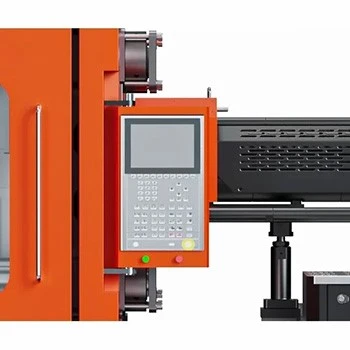
High-performance controller with synchronized communication, remote monitoring, precise positioning, and integrated system management for stable, accurate, and efficient multi-component molding.

Modular injection configurations, specialized screw technology, dual-cylinder balancing, and adaptive temperature control ensure maximum flexibility, precision, and reliable molding performance.
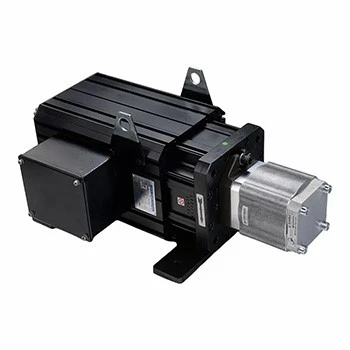
High-precision closed-loop servo control delivers accurate flow and pressure regulation, stable molding performance, and up to 80% energy savings.
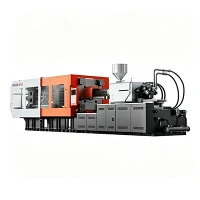
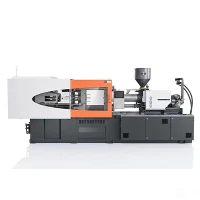
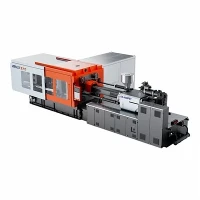
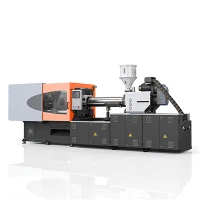

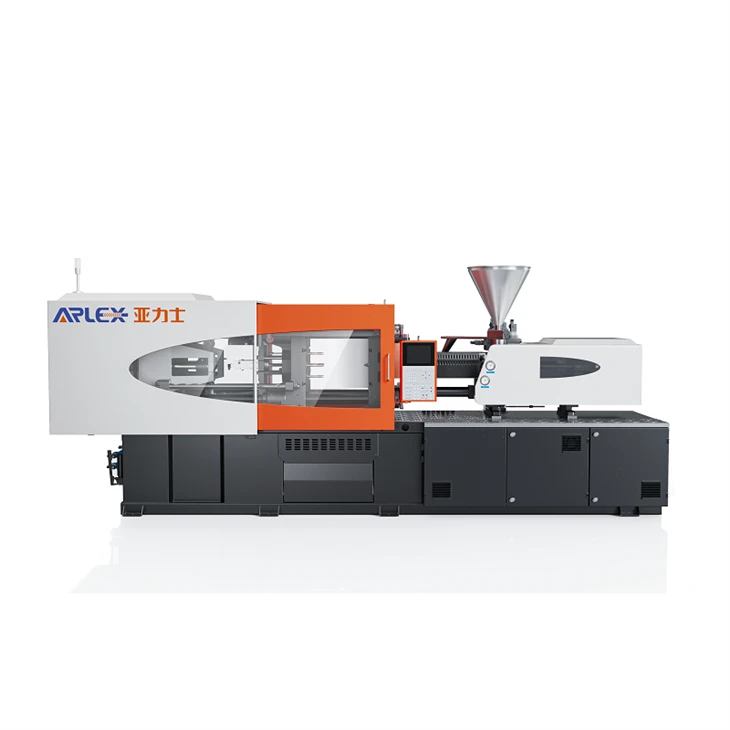
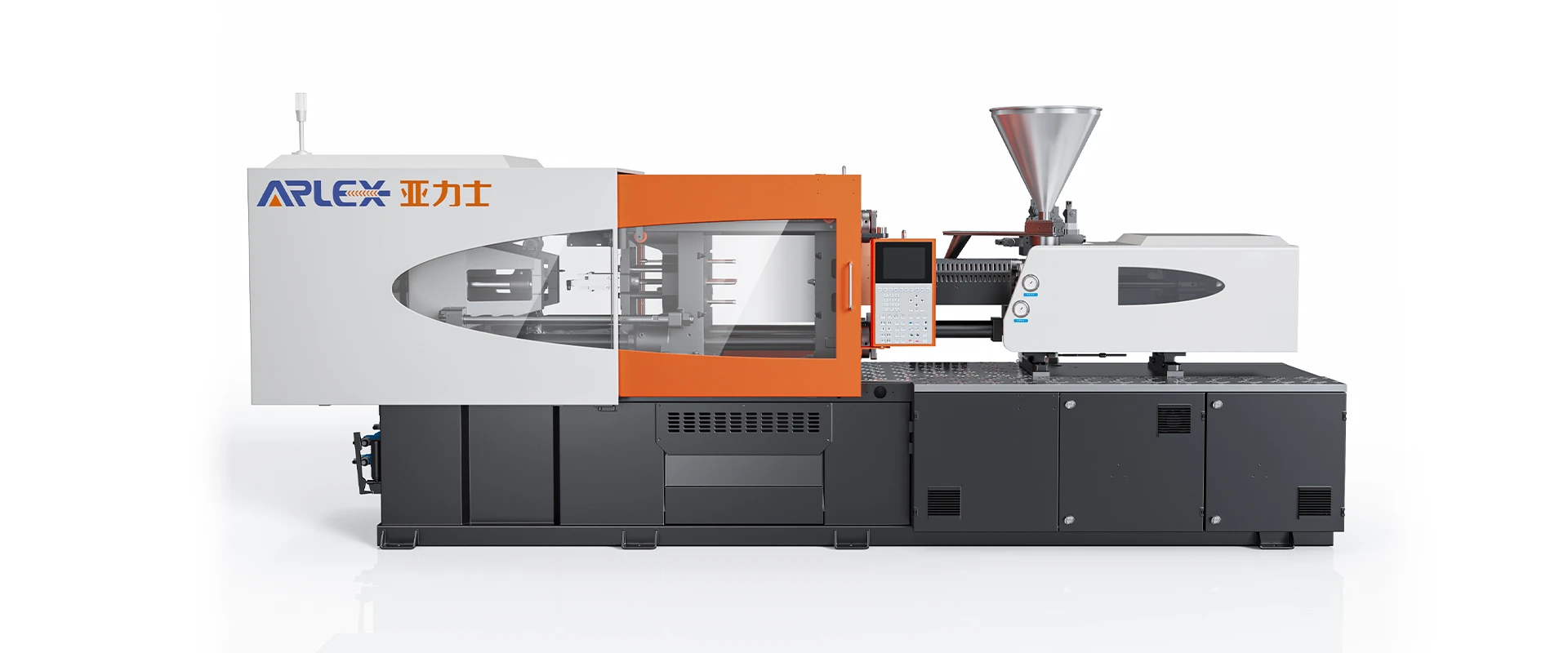
Servo-Hydraulic Engineering Plastic Molding Machine
Ningbo Yalishi(Arlex) Plastic Machinery Co., Ltd. is one of the leading manufacturers and suppliers of servo-hydraulic engineering plastic molding machine in China. Please feel free to wholesale advanced servo-hydraulic engineering plastic molding machine made in China here from our factory.
The Servo-Hydraulic Engineering Plastic Molding Machine integrates closed-loop servo-drive hydraulics with dedicated injection unit options designed for processing high-viscosity, glass-filled, and heat-sensitive engineering polymers. The platform covers clamping forces from 90T to 1680T, providing repeatable injection control, continuous barrel temperature regulation, and high hydraulic power density.
Servo-Hydraulic System
Servo motor: Permanent magnet synchronous motor provides variable rotational speed linked directly to system flow requirements, stopping rotation during cooling phases.
Hydraulic system: Twin-displacement gear pump layout combined with manifold block routing reduces oil flow resistance and fluid shear heating.
Closed-loop control: Pressure transducers and optical encoders send system feedback to the central controller at millisecond sampling intervals.
Pressure control: Proportional relief valves maintain system operating pressure with a control tolerance of ±0.5 bar during holding phases.
Speed control: Multi-stage proportional flow regulation controls platen motion profiles from fast traverse to final mold contact velocity.
Response stability: Hydraulic system pressure reaches set operating limits within 40 ms [Confirm with engineering], limiting system oil temperature build-up during continuous cycling.
Clamping Unit
Clamping force: Double-toggle five-point mechanical linkage converts hydraulic cylinder thrust into distributed clamping tonnage across the platens.
Platen structure: Ductile iron platens designed via Finite Element Analysis limit platen deflection under full tonnage load.
Tie-bar spacing: Standard horizontal and vertical clearance between tie-bars allows top and side insertion of multi-cavity or core-pulling molds.
Mold height: Motorized hydraulic gear adjustment system sets mold thickness parameters via digital position sensing.
Mold installation: T-slot pattern and tapped hole configurations conform to standard mold mounting specifications.
Clamping stability: Low-pressure mold protection mode monitors platen stroke resistance during closure, halting motion if position-to-force thresholds are exceeded.
Injection Unit
Injection speed: High-torque hydraulic motors with optional accumulator assistance regulate melt velocity profiles during filling.
Injection pressure: Injection pressure output capabilities reach up to 2200 bar for filling narrow wall sections and technical resin grades.
Injection stroke: Linear displacement transducers measure screw position to control stroke volume and cushion transitions.
Screw diameter: Alloy steel screws with specialized length-to-diameter (L/D) ratios provide uniform resin melting and color dispersion.
Injection weight: Specific shot capacities support single-cavity structural parts as well as multi-cavity precision component molds.
Plasticizing capability: High-torque hydraulic screw drive delivers steady recovery rates without local overheating of the polymer melt.
Control & Process Stability
Injection pressure/speed control: Up to 10 programmable injection velocity steps and 5 pressure-holding stages for filling profile adjustments.
Multi-stage injection: Switchover between injection and hold phases can be set by screw position, system pressure, or elapsed time.
Temperature control: Multi-zone PID controllers regulate ceramic barrel heating bands within a nominal ±1°C range [Confirm with engineering].
Back-pressure control: Proportional hydraulic back-pressure adjustment regulates melt density during the plasticizing stroke.
Repeatability: Closed-loop parameter tracking maintains continuous shot-to-shot consistency during continuous production.
Recommended Materials
|
PP |
Polypropylene (Unfilled, Mineral-Filled, Flame Retardant) |
|
PE |
Polyethylene (HDPE, LDPE) |
|
ABS |
Acrylonitrile Butadiene Styrene (Standard, Heat-Resistant Grades) |
|
PC |
Polycarbonate (High-Impact, Flame Retardant Grades) |
|
PA |
Polyamide / Nylon (PA6, PA66, Unfilled, Glass-Fiber Reinforced up to 50%) |
|
POM |
Polyoxymethylene / Acetal (Copolymer, High-Rigidity Grades) |
Recommended Applications
Automotive Components: Engine covers, air intake manifolds, functional housings, door handle mechanisms, interior structural brackets.
Electrical & Electronics: Circuit breaker bodies, relay cases, precision connectors, terminal blocks, battery module housings.
Industrial Parts: Heavy-duty gears, pump impellers, pipe fittings, valve bodies, industrial caster wheels, structural bushings.
Consumer Goods: Power tool housings, appliance balance rings, fan blades, structural frames.
Recommended Machine Models
This configuration can be applied across selected general-purpose injection molding machines:
- 90T
- 120T
- 140T
- 158T
- 178T
- 218T
- 278T
- 318T
- 358T
- 408T
- 478T
- 568T
- 658T
- 788T
- 988T
- 1180T
- 1380T
- 1680T
Machine Configuration
|
Parameter |
Unit |
Small Tonnage (90T - 218T) |
Medium Tonnage (278T - 568T) |
Large Tonnage (658T - 1680T) |
|
Clamping Tonnage |
kN |
900 - 2180 |
2780 - 5680 |
6580 - 16800 |
|
Distance Between Tie-Bars (H×V) |
mm |
360×360 - 530×530 |
610×610 - 830×830 |
920×920 - 1400×1300 |
|
Max. Mold Height |
mm |
380 - 530 |
620 - 830 |
900 - 1350 |
|
Min. Mold Height |
mm |
150 - 200 |
220 - 350 |
400 - 600 |
|
Screw Diameter Options |
mm |
30 / 35 / 40 |
50 / 60 / 70 |
85 / 100 / 120 |
|
Max. Injection Pressure |
bar |
1650 - 2200 |
1550 - 2050 |
1400 - 1850 |
|
Theoretical Shot Volume |
cm³ |
120 - 380 |
510 - 1450 |
2200 - 8500 |
|
Servo Motor Power |
kW |
11 - 22 |
30 - 55 |
65 - 110 |
Quality Testing & Technical Support
Platen Flatness Alignment: Alignment tools check platen parallelism under maximum toggle lockup force.
Hydraulic Pressure Integrity Test: Continuous 48-hour pressure static leak and dynamic pressure fluctuation inspection.
Thermal Imaging Inspection: Infrared thermography tracks electrical cabinet terminal connections and motor casing temperatures under full load.
Full-Cycle Dry Run Testing: Pre-shipment testing includes 72 continuous hours of dry cycling to verify sequence timing and mechanical movement.
Technical Support & Service
Trial Documentation: Machine parameter logging including hydraulic pressure curves, temperature profiles, and cycle timing.
On-Site Commissioning: Technical support for machine leveling, hydraulic fluid checks, line connections, and initial parameter entry.
Maintenance Guidelines: Documentation detailing lubrication points, filter element replacement intervals, and seal inspection protocols.
Spare Components: Stocked replacement parts including screw tips, check rings, heating bands, and hydraulic seals.
FAQ
Q: What barrel and screw options are used for processing glass-fiber filled resins like PA66-GF30?
A: Bimetallic barrels paired with tungsten carbide coated screws [Confirm coating spec with engineering] are available to reduce abrasive wear from glass fibers and maintain flight dimensions during extended production.
Q: How is barrel temperature controlled to prevent heat-sensitive materials from degrading?
A: Multi-zone PID controllers operating with solid-state relays manage barrel heater bands. Screw profiles are selected to limit excess frictional heat generation during the recovery phase.
Q: How does the servo-hydraulic system maintain hold pressure stability during long packing cycles?
A: Pressure transducers monitor fluid pressure in real time, signaling the servo motor to adjust pump RPM and deliver precise hydraulic holding pressure without excessive fluid recirculation.
Q: What cooling system is used to maintain hydraulic oil temperature?
A: A shell-and-tube heat exchanger operates within the hydraulic circuit. Combined with lower heat generation from variable-speed servo pumps, oil temperature is maintained below standard operational limits (typically below 55°C) under continuous load.
Q: What automation interfaces are available for parts handling or auxiliary equipment?
A: Standardized EUROMAP 63 and EUROMAP 73 interfaces are integrated for linear or articulated robot connection, alongside dedicated I/O terminals for core-pull sequence control and valve gate triggers.
Hot Tags: servo-hydraulic engineering plastic molding machine, China servo-hydraulic engineering plastic molding machine manufacturers, suppliers, factory
You Might Also Like




Send Inquiry