



Reinforced cast iron construction and advanced closed-loop control ensure smooth rotation, accurate positioning, stable operation, and extended mold service life.
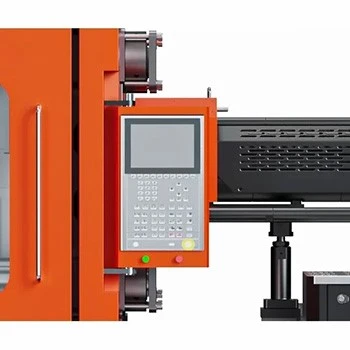
High-performance controller with synchronized communication, remote monitoring, precise positioning, and integrated system management for stable, accurate, and efficient multi-component molding.

Modular injection configurations, specialized screw technology, dual-cylinder balancing, and adaptive temperature control ensure maximum flexibility, precision, and reliable molding performance.
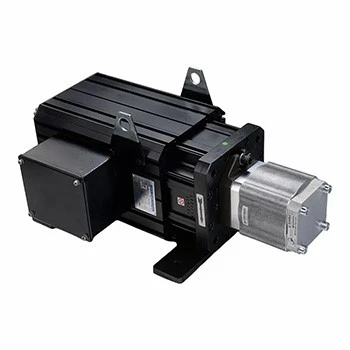
High-precision closed-loop servo control delivers accurate flow and pressure regulation, stable molding performance, and up to 80% energy savings.
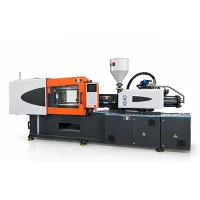
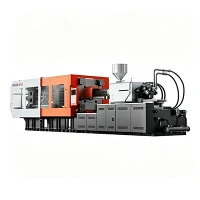
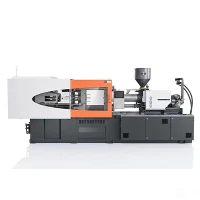
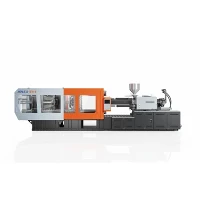
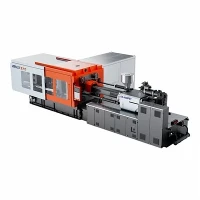
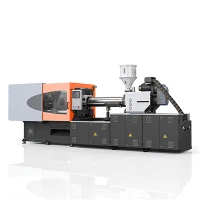

Servo-Hydraulic Injection Molding Machine
Servo-Hydraulic Injection Molding Machine Manufacturer for Precision Plastics
High-efficiency servo-hydraulic injection molding machines designed for low energy consumption, precise pressure control, and reliable continuous production.
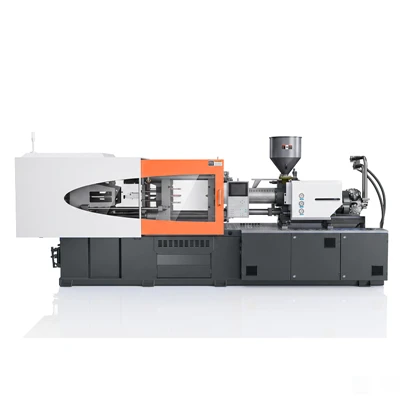


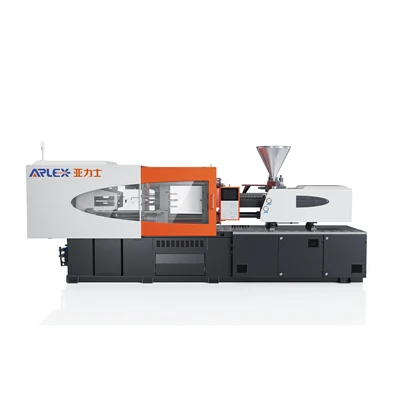


What Is a Servo-Hydraulic Injection Molding Machine?
A Servo-Hydraulic Injection Molding Machine combines hydraulic clamping force with an electric servo motor drive system. Unlike conventional fixed-pump machinery that runs continuously at full motor speed, a servo-hydraulic system utilizes a high-response permanent magnet AC motor coupled with an internal gear pump. The drive adjusts rotational speed in real time matching exact pressure and flow requirements during each cycle phase. Motor speed drops near zero during holding and cooling periods, lowering electrical power demand while reducing oil friction heat. Lower running temperatures slow down seal wear and maintain hydraulic oil viscosity, sustaining mechanical repeatability within ±0.1 mm over extended operations.

Reduced Power Consumption: Matches motor output directly to instantaneous hydraulic load, cutting kilowatt-hour usage per kilogram of molded resin.
Lower Oil Heat Generation: Reduced fluid turbulence lowers oil chiller loads and keeps reservoir oil temperatures stable below 45°C.
High Cycle Repeatability: Closed-loop encoder feedback regulates pressure and speed to control part weight and dimensions.
Extended Seal and Fluid Lifespan: Stable operating temperatures prevent hydraulic oil oxidation and thermal hardening of internal seals.
Low Noise Levels: Operational sound remains under 75 dB during full-pressure clamping and drops further during cooling phases.
Servo Motor: Permanent magnet synchronous motor featuring low rotational inertia and high thermal dissipation, accelerating from standstill to maximum operating pressure within 40 milliseconds.
Hydraulic Pump: Low-noise internal gear pump cast from wear-resistant alloy steel, maintaining high volumetric efficiency during high-pressure hold phases.
Closed-Loop Pressure Control: Pressure sensor mounted on the main manifold block delivers continuous signal feedback to adjust motor torque dynamically.
Flow Control: Digital shaft encoder tracks motor rotation speed to regulate pump output volume without relying on proportional valve throttling.
Energy Management: Digital drive inverter tracks real-time load requirements per cycle step and scales down current draw during non-movement dwell times.

Key Machine Features
Stable Injection
Dual-injection cylinders maintain balanced axial load along the screw axis during plasticizing and filling.
01
Precise Pressure Control
Multi-stage injection speed and holding pressure settings prevent part flashing and sink marks.
02
Responsive Operation
Dynamic motor acceleration reduces transition delays between pressure ramps, shortening overall cycle time.
03
Energy Efficiency
Power matching prevents energy losses through relief valves, reducing baseline facility grid load.
04
Reliable Clamping
Finite-element-optimized five-point twin toggle structure maintains platen parallelism under heavy tonnages.
05
Clamping and Injection Configuration
|
Subsystem |
Standard Technical Configuration |
|
Clamping Mechanism |
5-point twin-toggle, ductile iron platens |
|
Tie Bar Guidance |
Hard-chromed high-tensile steel bars, graphite bushings |
|
Ejection Unit |
Multi-point hydraulic pin layout, adjustable stroke |
|
Screw & Barrel |
Nitrided 38CrMoAlA alloy steel, optional bimetallic layer |
|
Temperature Control |
Multi-zone ceramic heaters with solid-state relays |
|
Injection Drive |
Balanced double-cylinder unit with linear guides |

Applicable Polymer Resins
- Commodity Resins: PP, PE, PS, ABS, HIPS
- Engineering Resins: PA6, PA66, PC, POM, PBT, PMMA
- Reinforced Compounds: Glass-fiber filled resins up to 40% loading using bimetallic screw barrels
Key Manufacturing Applications
- Industrial Goods: Storage crates, pallets, transport containers, utility boxes.
- Automotive Parts: Interior trim panels, bracket housings, duct connectors.
- Household Appliances: Washing machine tubs, refrigerator drawers, air conditioner housings.
- Electrical Products: Junction boxes, terminal blocks, switch plates, conduit fittings.
Available Machine Models
|
Model |
Clamping Force (kN) |
Screw Diameter (mm) |
Max Shot Weight (g - PS) |
Tie Bar Distance (H x V mm) |
|
Model 120-S |
1,200 |
35 / 40 / 45 |
165 - 272 |
410 × 410 |
|
Model 200-S |
2,000 |
45 / 50 / 55 |
340 - 510 |
520 × 520 |
|
Model 320-S |
3,200 |
60 / 65 / 70 |
780 - 1,060 |
660 × 660 |
|
Model 480-S |
4,800 |
75 / 80 / 85 |
1,480 - 1,890 |
800 × 800 |
|
Model 650-S |
6,500 |
85 / 90 / 100 |
2,150 - 2,980 |
920 × 920 |
How to Select the Right Servo-Hydraulic Machine
Calculate Clamping Force
Measure the total projected area of the part and runner, then multiply by resin cavity pressure requirements.
Determine Shot Size
Select a screw diameter where the combined part and runner weight occupies 20% to 80% of maximum injection volume.
Check Platen Clearance
Verify mold dimensions against horizontal and vertical tie bar spacing, ensuring sufficient opening stroke for part clearance.
Evaluate Plasticizing Capacity
Match screw rotation speed and torque ratings to resin melt requirements to prevent cycle slowdowns during cooling.
Testing, Commissioning and Technical Support

Factory Acceptance Testing
Machinery completes dry-run cycle testing and hydraulic pressure hold checks prior to factory dispatch.
Mold Trial Verification
Parameter logging and mold testing available using client molds or standardized test tooling to record cycle stability.
Installation Support
Field service technicians available for foundation leveling, hydraulic fluid filling, electrical hookup, and control tuning.
Spare Parts Stock
Hydraulic valves, seal kits, electrical cards, and heater bands maintained for international dispatch.
Why Choose Us
Structural Platen Integrity
Platens cast from high-density ductile iron undergo thermal stress relief prior to CNC machining to limit deflection under load.
Component Testing
Servo drives, pumps, and valves undergo thermal bench testing under rated pressure before machine assembly.
Verifiable Energy Metrics
Energy consumption metrics are measured during factory acceptance tests to verify power savings before delivery.
Custom Configuration Options
Specialized screw geometries, core pull sequences, and valve setups integrated during main assembly.
FAQ

Request a Servo-Hydraulic Machine Proposal
Submit mold dimensions, resin specifications, part weights, or target cycle times to receive complete machine technical specifications and an official proposal.