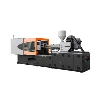
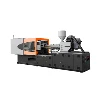
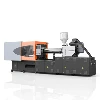
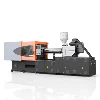
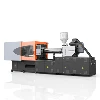
Injection molding machine robots are automated production equipment that can mimic some functions of the human upper limbs. They can be automatically controlled to transport products or handle tools according to predetermined requirements.
Plastic processing plants in South and East China are showing increasing interest in robots, but the adoption rate of injection molding machine robots in the domestic plastics machinery industry is less than 10%. Robots can ensure consistent operating cycles, improve quality, and enhance safety.
With the rapid development of the plastics processing industry in my country, the automation level of injection molding equipment is also increasing. Modern injection molding machines are often equipped with robots to improve production efficiency.
My country's imports and exports of injection molding machines are roughly equal, both around 15,000 units, but imports amount to US$920 million while exports amount to US$350 million. Precision injection molding machines are mainly foreign brands, and extrusion equipment such as biaxially oriented PET extrusion units, film extrusion units, and precision medical catheter extrusion units have also remained the domain of foreign companies.
Developing domestically produced precision injection molding and extrusion equipment with independent intellectual property rights is essential. This can not only replace imports but also allow my country to secure a place in the high-end international plastics machinery market. Traditional plastics machinery still has potential for energy saving because past designs often focused solely on the production capacity of individual machines.
In the design of energy-efficient plastics machinery, production speed is no longer the most important indicator; the most crucial factor is the energy consumption per unit weight of product processed. Therefore, it is necessary to optimize the mechanical structure, control mode, and operating conditions of the equipment based on minimizing energy consumption.
With energy conservation and emission reduction becoming a national strategy, the energy-saving issue of injection molding machines has also received widespread attention. In the conventional injection molding machine field, two relatively mature methods for energy saving in terms of motors are frequency converters and servo motors, with servo motors becoming increasingly widely accepted.