

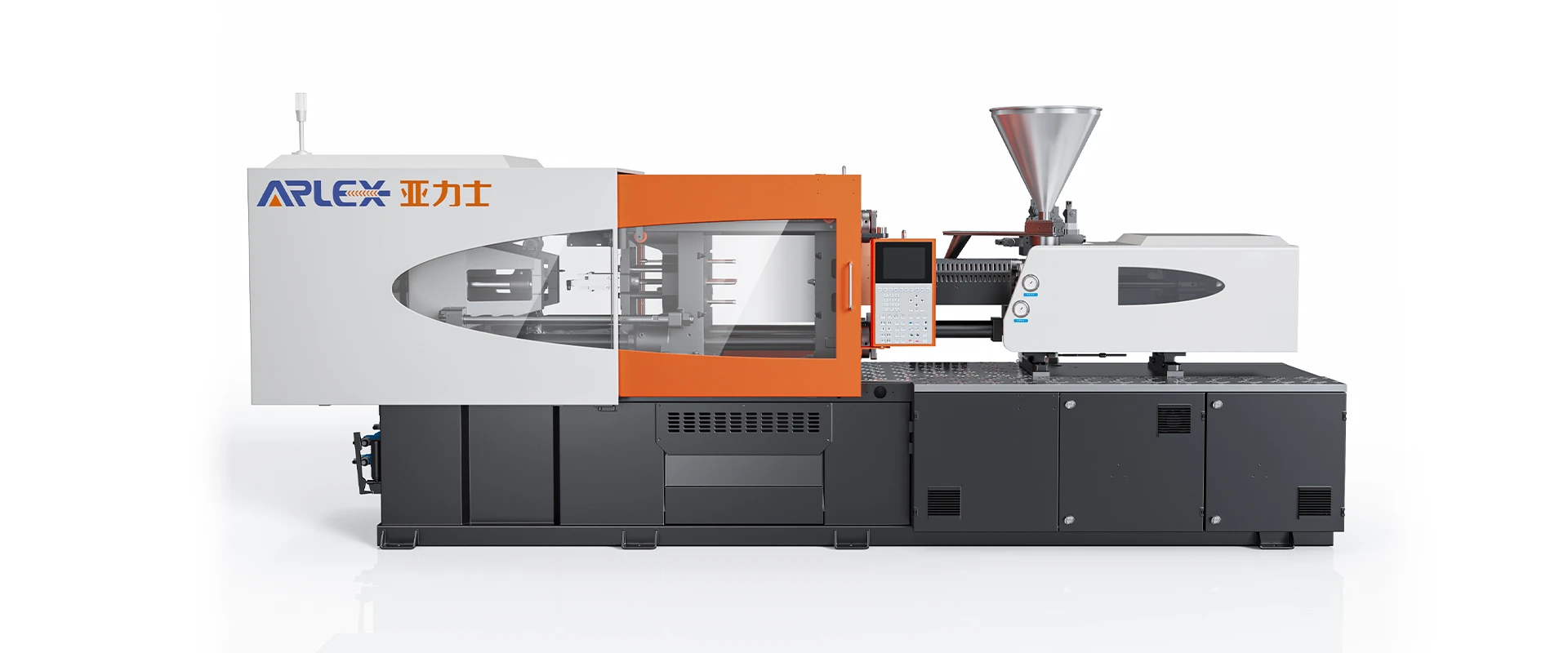

Reinforced cast iron construction and advanced closed-loop control ensure smooth rotation, accurate positioning, stable operation, and extended mold service life.
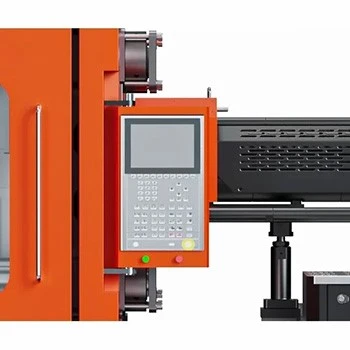
High-performance controller with synchronized communication, remote monitoring, precise positioning, and integrated system management for stable, accurate, and efficient multi-component molding.

Modular injection configurations, specialized screw technology, dual-cylinder balancing, and adaptive temperature control ensure maximum flexibility, precision, and reliable molding performance.
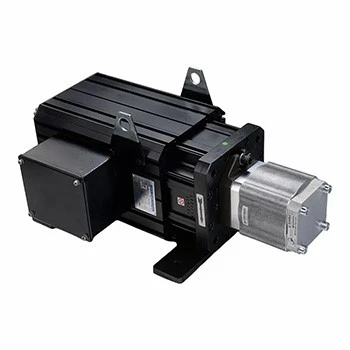
High-precision closed-loop servo control delivers accurate flow and pressure regulation, stable molding performance, and up to 80% energy savings.
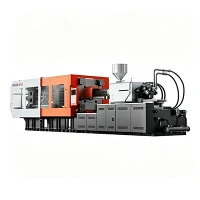
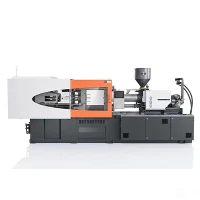
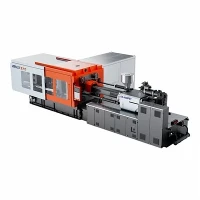
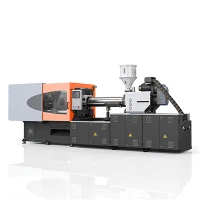

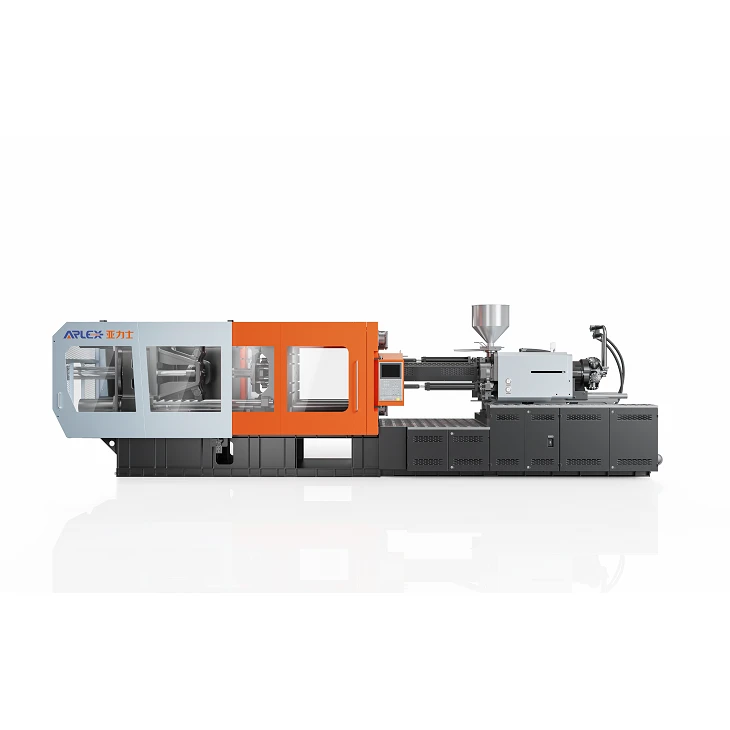
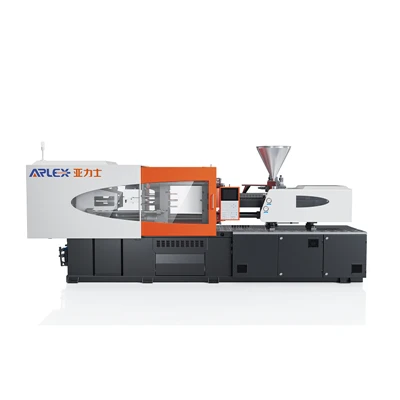
Closed-Loop Injection Control Molding Machine
Ningbo Yalishi(Arlex) Plastic Machinery Co., Ltd. is one of the leading manufacturers and suppliers of closed-loop injection control molding machine in China. Please feel free to wholesale advanced closed-loop injection control molding machine made in China here from our factory.
Precision molding requires minimal parting-line flash, zero short shots, and tight dimensional tolerances across long production runs. A Closed-Loop Injection Control Molding Machine eliminates thermal degradation and pressure fluctuation during processing. Integrated high-frequency sensors monitor real-time pressure, velocity, and screw position, adjusting hydraulic or electric servo valves within milliseconds to maintain identical cavity filling across every cycle.
What Determines Injection Molding Precision?
Achieving consistent dynamic filling depends on the physical stability of seven key variables:
Injection Speed: Constant melt velocity prevents differential cooling, jetting, and structural weak spots.
Injection Pressure: Precise internal pressure transfers the correct packing density into the cavity without causing mold deflection.
Position Control: Accurate screw stroke termination prevents over-packing and parting-line flash.
Temperature Control: Multi-zone PID control maintains uniform melt viscosity throughout the barrel.
Plasticizing Stability: Homogenous plastic melt ensures consistent dynamic viscosity before injection begins.
Back Pressure: Precise counter-force removes entrapped air and eliminates micro-voids during screw recovery.
Repeatability: Minimal shot-to-shot variance ensures all dimensional tolerances remain within tight CPK specifications.
Injection Control System
Closed-Loop Control: Linear optical encoders and dynamic pressure transducers supply real-time feedback to the main controller, executing dynamic stroke and pressure corrections every millisecond.
Pressure Control: Closed-loop proportional valves manage system pressure during transition, dampening pressure spikes to preserve mold integrity.
Speed Control: Multi-stage injection velocity profiling maintains steady flow front progress regardless of gate resistance or viscosity shifts.
Position Control: Screw position sensing achieves absolute stopping accuracy within ±0.01 mm for strict shot-size repeatability.
Multi-Stage Injection: Up to 10 customizable injection speed and pressure steps allow tailored filling profiles for complex mold geometries.
Plasticizing & Melt Preparation
Screw Rotation: High-torque servo motors deliver constant RPM during screw recovery, eliminating torque fluctuations.
Plasticizing: Optimized screw geometry ensures uniform shear distribution and complete resin homogenisation without polymer degradation.
Back Pressure: Digital proportional valves control back pressure precisely to increase melt density and remove volatile gases.
Melt Temperature: Ceramic heating bands coupled with thermocouple feedback maintain barrel temperature within ±0.5°C.
Material Preparation: Decompression stroke settings prevent nozzle drool and stringing during mold opening.
Clamping System
Rigid twin-toggle or hydraulic clamping structures reduce platen deflection under full tonnage. Tie-bar strain gauges monitor tie-bar tension to distribute clamping force evenly across the platen surface, extending mold life and protecting high-precision parting lines.
Repeatability & Process Stability
Eliminating structural vibration and thermal drift ensures continuous production stability:
Shot Weight Variation: Standard deviation of part weight remains within ≤ 0.1% across multi-cavity runs.
CPK Performance: Process capability indexes reach CPK ≥ 1.67 on critical dimensional features over 24-hour continuous production cycles.
Thermal Compensation: Automatic hydraulic oil cooling loops keep viscosity stable during long running hours.
Position Repeatability: Mold open and close stopping accuracy stays within ±0.02 mm to prevent ejector pin damage.
Suitable Materials
|
Engineering Resins |
PEEK, PPS, LCP, PA66 or PA6 with glass fiber reinforcement up to 50%. |
|
Optical Resins |
PMMA, PC, COC, COP. |
|
Standard Resins |
POM, ABS, PBT, PPO, TPE. |
Suitable Applications
Precision Industrial Parts
Gears, micro-housing components, pump impellers.
Electrical Components
High-density connectors, micro-switches, terminal blocks.
Optical Components
Camera lens holders, light guides, optical frames.
Medical Components
Syringe barrels, fluidic manifolds, diagnostic cartridge cassettes.
Automotive Precision Parts
Sensor housings, fuel injector covers, electronic control unit enclosures.
Technical Configuration
|
Parameter / Feature |
Technical Specification |
|
Clamping Force Range |
60 Ton – 450 Ton |
|
Control Sampling Rate |
< 1 ms dynamic closed-loop response |
|
Position Sensing Resolution |
±0.005 mm linear encoder |
|
Injection Stopping Accuracy |
±0.01 mm screw stroke termination |
|
Temperature Stability |
±0.5°C multi-zone PID barrel control |
|
Servo Valve Response |
≤ 12 ms full stroke actuation |
|
Weight Consistency |
Shot weight standard deviation ≤ 0.1% |
|
Process Capability Index |
CPK ≥ 1.67 on critical parameters |
|
Oil Temperature Range |
40°C ± 2°C with dynamic water exchanger |
|
Industrial Protocol |
EUROMAP 63, EUROMAP 77, OPC UA |
Testing & Quality Control
Every machine undergoes factory acceptance testing before dispatch:
48-hour continuous high-speed operation to test mechanical stability and hydraulic seal integrity.
100 consecutive sample molding runs evaluated via digital analytical balances.
Full-load operation monitoring oil temperature, barrel zone stability, and platen stress distribution.
Part dimensions measured using 3D Coordinate Measuring Machines to confirm CPK specifications.
FAQ
Q: How does closed-loop control improve molding precision compared to open-loop systems?
A: Open-loop systems send signals without verifying physical movement, leading to dimensional errors from fluid temperature changes or resin viscosity shifts. Closed-loop control continuously monitors speed, pressure, and position with dynamic sensors and adjusts valves within 1 millisecond, maintaining consistent shot weights and tight tolerances.
Q: What part weight consistency can this equipment achieve?
A: Under consistent resin quality and stable shop floor temperatures, the machine achieves a shot-to-shot weight variation standard deviation of ≤ 0.1%.
Q: Can this equipment handle engineering resins with high filler content?
A: Yes. Screw and barrel units feature wear-resistant and corrosion-resistant bimetallic alloys capable of processing glass-fiber or carbon-fiber filled resins up to 50% without premature abrasion or melt degradation.
Q: Is the control architecture compatible with smart factory networks?
A: The control system natively supports EUROMAP 63, EUROMAP 77, and OPC UA protocols, enabling direct integration into Manufacturing Execution Systems for real-time telemetry and data logging.
Q: What cooling provisions preserve hydraulic fluid stability?
A: An automated heat exchanger continuously regulates hydraulic fluid temperature. The main controller monitors fluid conditions and adjusts cooling flow to hold oil temperature at 40°C ± 2°C, preventing viscosity drops and pressure drift during continuous operation.
Hot Tags: closed-loop injection control molding machine, China closed-loop injection control molding machine manufacturers, suppliers, factory
You Might Also Like



Send Inquiry