As a supplier of Mold Temperature Controllers, I often get asked if our controllers can be integrated with other industrial equipment. The short answer is yes, and in this blog, I'll dive into why and how this integration can benefit your operations.
Why Integrate a Mold Temperature Controller?
First off, let's talk about why you'd want to integrate a Mold Temperature Controller in the first place. In industrial settings, precision and efficiency are key. A Mold Temperature Controller ensures that the mold temperature remains stable during the manufacturing process. When integrated with other equipment, it can enhance the overall performance of your production line.
For example, in injection molding, maintaining the right mold temperature is crucial for producing high - quality products. If the temperature is too high or too low, it can lead to defects such as warping, sink marks, or poor surface finish. By integrating the Mold Temperature Controller with the injection molding machine, you can ensure that the temperature is precisely controlled throughout the entire process.
How to Integrate a Mold Temperature Controller
Integrating a Mold Temperature Controller with other industrial equipment isn't as complicated as it might seem. Most modern Mold Temperature Controllers come with advanced control systems that allow for easy communication with other devices.
One common way to integrate is through digital interfaces. Many controllers support protocols like Modbus, Profibus, or Ethernet/IP. These protocols enable the controller to exchange data with other equipment, such as PLCs (Programmable Logic Controllers) or SCADA (Supervisory Control and Data Acquisition) systems.
For instance, if you have a PLC controlling your injection molding machine, you can connect the Mold Temperature Controller to it. The PLC can then receive temperature data from the controller and adjust the process parameters accordingly. This real - time data exchange helps in optimizing the production process and reducing waste.
Another way is through analog signals. Some equipment may use analog input or output signals to communicate. The Mold Temperature Controller can be configured to send and receive these signals, allowing it to work in harmony with other machines.
Integration with Different Types of Industrial Equipment
Injection Molding Machines
As mentioned earlier, injection molding is one area where Mold Temperature Controller integration is highly beneficial. By integrating with the injection molding machine, the controller can adjust the temperature based on the injection speed, pressure, and cycle time. This ensures that the plastic material fills the mold evenly and cools properly, resulting in high - quality molded parts. You can learn more about our Mold Temperature Controller on our website.
Extrusion Machines
In extrusion processes, maintaining a consistent temperature is also vital. The Mold Temperature Controller can be integrated with the extrusion machine to control the temperature of the die. This helps in producing extruded products with uniform dimensions and properties.
Die - Casting Machines
Die - casting involves injecting molten metal into a mold. The temperature of the mold can significantly affect the quality of the cast parts. By integrating a Mold Temperature Controller with the die - casting machine, you can ensure that the mold temperature is within the optimal range, reducing the risk of defects like porosity and cracking.
Benefits of Integration
Improved Product Quality
When the Mold Temperature Controller is integrated with other equipment, it can precisely control the temperature, leading to better - quality products. This is especially important in industries where product quality is a top priority, such as automotive and medical device manufacturing.
Increased Efficiency
Integration allows for better coordination between different machines on the production line. This can reduce downtime, increase production speed, and improve overall efficiency. For example, the Mold Temperature Controller can start heating or cooling the mold in advance, reducing the time between production cycles.
Cost Savings
By reducing waste and improving efficiency, integration can lead to significant cost savings. Fewer defective products mean less material waste, and increased production speed means higher output with the same resources.


Dual Temperature Mold Temperature Controller
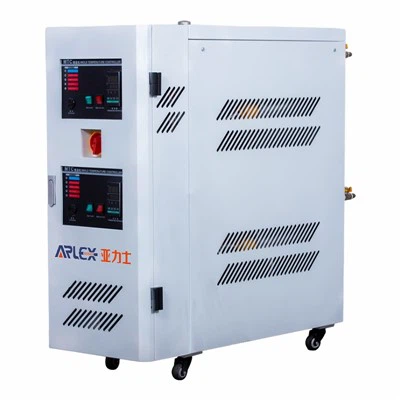
We also offer a Dual Temperature Mold Temperature Controller that can be integrated with other industrial equipment. This controller allows for the independent control of two different temperature zones, providing even more flexibility in the manufacturing process. It's ideal for applications where different parts of the mold require different temperatures.
Contact Us for Integration Solutions
If you're interested in integrating a Mold Temperature Controller with your industrial equipment, we're here to help. Our team of experts can provide you with customized solutions based on your specific needs. Whether you're a small - scale manufacturer or a large industrial operation, we have the experience and technology to ensure a seamless integration.
Don't hesitate to reach out to us to discuss how our Mold Temperature Controllers can enhance your production line. We're confident that our products and services can make a significant difference in your manufacturing process.
References
- "Industrial Automation Handbook", McGraw - Hill
- "Molding Process Optimization", Society of Plastics Engineers