As a supplier of Mold Temperature Controllers, I've witnessed firsthand the critical role these devices play in the injection molding process. One of the most challenging aspects that mold temperature controllers face is handling sudden temperature changes. In this blog post, I'll delve into how our Mold Temperature Controllers are designed to tackle these abrupt shifts and ensure consistent, high-quality molding results.
Understanding the Impact of Sudden Temperature Changes
Sudden temperature changes in the injection molding process can have a significant impact on the final product. These changes can lead to warping, shrinkage, and other defects, which can compromise the quality and integrity of the molded parts. For example, if the mold temperature drops suddenly during the injection phase, the molten plastic may cool too quickly, resulting in uneven solidification and a poor surface finish. On the other hand, a sudden increase in temperature can cause the plastic to overheat, leading to degradation and a loss of mechanical properties.
How Our Mold Temperature Controllers Work
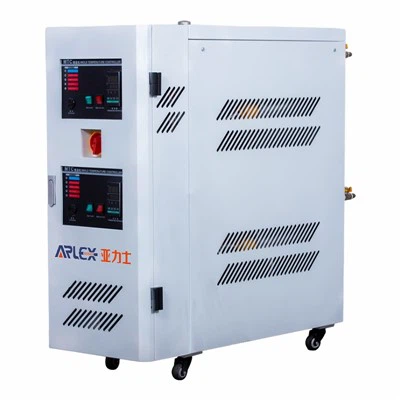
Our Mold Temperature Controller is equipped with advanced technology and features that enable it to handle sudden temperature changes effectively. Here's a breakdown of how our controllers work:
Precise Temperature Sensing
Our controllers are equipped with high-precision temperature sensors that continuously monitor the temperature of the mold and the cooling or heating medium. These sensors provide real-time feedback to the controller, allowing it to make accurate adjustments to maintain the desired temperature.
Fast Response Time
In the event of a sudden temperature change, our controllers are designed to respond quickly. They can adjust the flow rate of the cooling or heating medium and the power output of the heater or cooler to bring the temperature back to the setpoint within a short period.


Advanced Control Algorithms
Our controllers use advanced control algorithms to optimize the temperature control process. These algorithms take into account factors such as the thermal properties of the mold, the type of plastic being used, and the injection molding process parameters to ensure precise and stable temperature control.
Dual Temperature Control
For applications that require more precise temperature control, we offer a Dual Temperature Mold Temperature Controller. This controller allows you to control the temperature of two different zones in the mold independently, providing greater flexibility and accuracy.
Case Studies: Real-World Examples
To illustrate the effectiveness of our Mold Temperature Controllers in handling sudden temperature changes, let's take a look at a few case studies:
Case Study 1: Automotive Parts Manufacturer
An automotive parts manufacturer was experiencing issues with warping and shrinkage in their injection molded parts. The company was using a traditional temperature control system that was unable to handle sudden temperature changes during the injection process. After switching to our Mold Temperature Controller, the company was able to achieve more consistent temperature control, resulting in a significant reduction in part defects and an improvement in overall product quality.
Case Study 2: Medical Device Manufacturer
A medical device manufacturer was producing complex parts with tight tolerances. The company needed a temperature control system that could handle sudden temperature changes and maintain precise temperature control throughout the injection molding process. Our Dual Temperature Mold Temperature Controller was installed, and the company was able to achieve excellent temperature control, resulting in high-quality parts that met the strict requirements of the medical industry.
Tips for Optimizing Temperature Control
In addition to using a high-quality Mold Temperature Controller, there are several other steps you can take to optimize temperature control and minimize the impact of sudden temperature changes:
Proper Mold Design
A well-designed mold can help to distribute heat evenly and reduce the likelihood of temperature fluctuations. Make sure your mold is designed with proper cooling channels and insulation to ensure efficient heat transfer.
Regular Maintenance
Regular maintenance of your Mold Temperature Controller is essential to ensure its optimal performance. This includes cleaning the heat exchanger, checking the fluid levels, and calibrating the temperature sensors.
Training and Education
Proper training and education of your operators are crucial for ensuring the effective use of your Mold Temperature Controller. Make sure your operators understand how to operate the controller and how to respond to sudden temperature changes.
Conclusion
Handling sudden temperature changes is a critical challenge in the injection molding process. Our Mold Temperature Controllers are designed to address this challenge by providing precise temperature control, fast response times, and advanced control algorithms. By using our controllers and following the tips outlined in this blog post, you can optimize temperature control, improve product quality, and increase productivity.
If you're interested in learning more about our Mold Temperature Controllers or would like to discuss your specific requirements, please don't hesitate to contact us. We'd be happy to help you find the right solution for your injection molding needs.
References
- "Injection Molding Handbook" by OSSwald, Hans - Peter; Menges, Gerhard; Michaeli, Walter
- "Mold Temperature Control in Injection Molding" by various industry research papers