

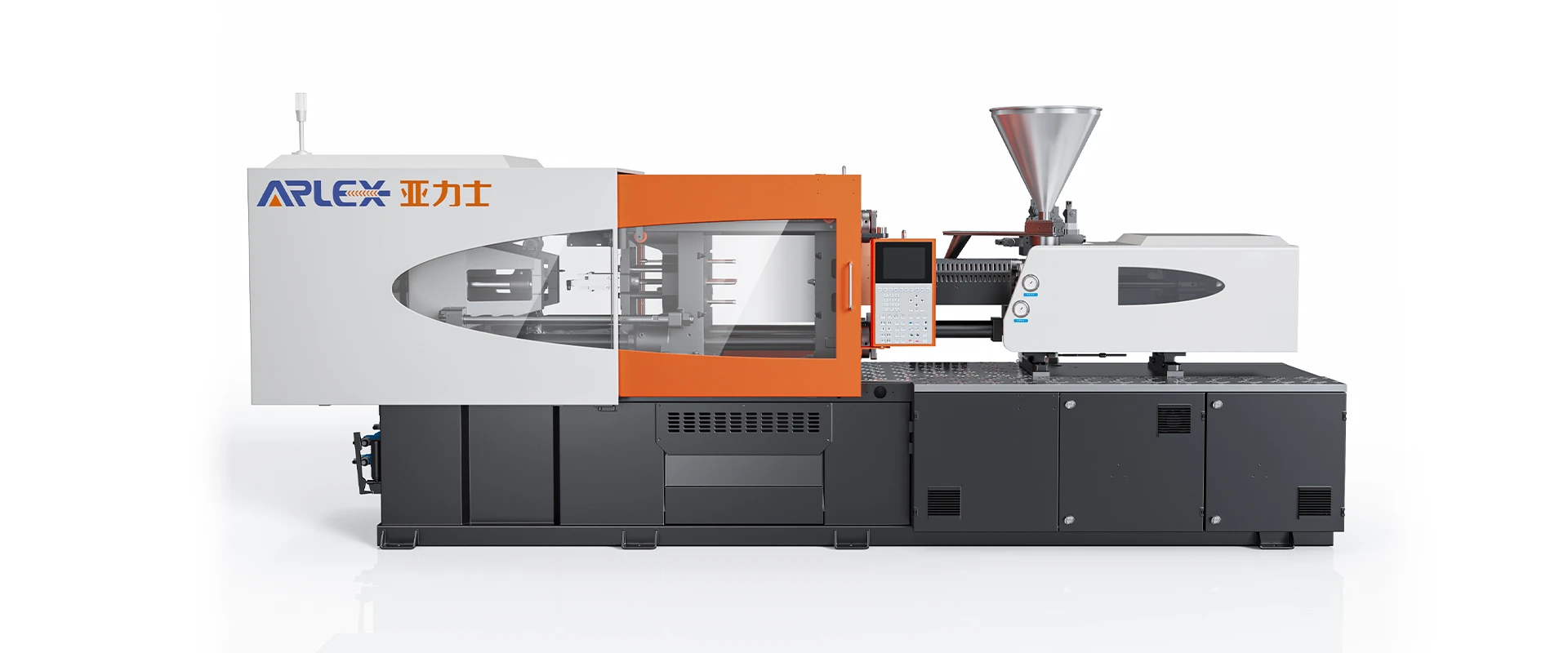

Reinforced cast iron construction and advanced closed-loop control ensure smooth rotation, accurate positioning, stable operation, and extended mold service life.
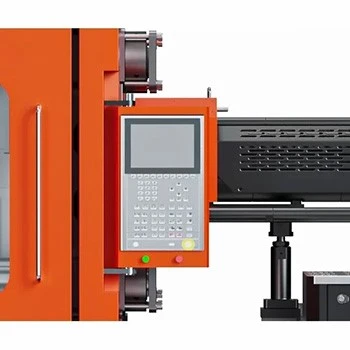
High-performance controller with synchronized communication, remote monitoring, precise positioning, and integrated system management for stable, accurate, and efficient multi-component molding.

Modular injection configurations, specialized screw technology, dual-cylinder balancing, and adaptive temperature control ensure maximum flexibility, precision, and reliable molding performance.
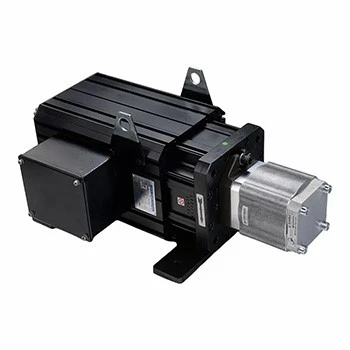
High-precision closed-loop servo control delivers accurate flow and pressure regulation, stable molding performance, and up to 80% energy savings.
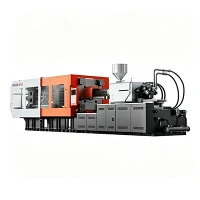
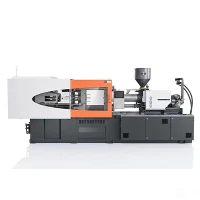
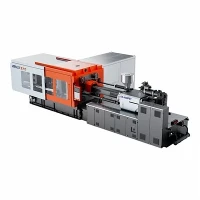
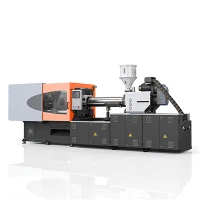


Stable Back-Pressure Molding Machine
Ningbo Yalishi(Arlex) Plastic Machinery Co., Ltd. is one of the leading manufacturers and suppliers of stable back-pressure molding machine in China. Please feel free to wholesale advanced stable back-pressure molding machine made in China here from our factory.
The Stable Back-Pressure Molding Machine integrates real-time proportional pressure regulation and fast-response hydraulic feedback to regulate plasticizing melt density during screw recovery. By holding steady resistance against the screw throughout plasticization, this equipment stabilizes shot weight tolerances, clears trapped air, and maintains dynamic viscosity across continuous multi-cavity precision cycles.
What Determines Injection Molding Precision?
Precision molding relies on tight synchronization between mechanical stiffness, thermal boundaries, and hydraulic response metrics:
Injection Speed: Velocity profile stability ensures uniform melt front progression, controlling local shear rates and internal stress within thin-wall geometries.
Injection Pressure: Consistent pressure delivery prevents volumetric shrinkage differences across cavity sets while eliminating parting line flash.
Position Control: Screw position measurement to ±0.01 mm sets the transition point between filling and holding phases, avoiding short shots or over-packing.
Temperature Control: Multi-zone barrel regulation within ±0.5°C secures constant melt viscosity and protects thermal-sensitive polymers.
Plasticizing Stability: Screw drive torque and homogenizing flight geometries yield steady resin melting without thermal degradation.
Back Pressure: Continuous resistance applied against the retreating screw during plasticization governs melt density, gas evacuation, and pigment dispersion.
Repeatability: Machinery dynamic capability to reproduce target pressure, position, and thermal setpoints across sequential runs.
Injection Control System
The injection system relies on closed-loop feedback and high-frequency valve response to maintain dynamic accuracy:
Closed-loop control: Monitors injection pressure and velocity curves every 0.5 ms to compensate for raw material viscosity variations.
Pressure control: Multi-stage injection pressure step-downs manage filling through holding transitions seamlessly.
Speed control: Programmable 10-stage velocity profiling guides resin through narrow gates without generating shear discoloration.
Position control: Absolute optical encoders track screw motion to complete phase switchovers within milliseconds.
Multi-stage injection: Tailored pressure and speed steps balance wall density, eliminate sink marks, and minimize residual stress.
Plasticizing & Melt Preparation
Melt preparation focuses on consistent plasticizing density during screw recovery:
Screw rotation: Electric servo drives deliver digital speed feedback, keeping shear rates uniform regardless of hydraulic system load.
Plasticizing: Specialized barrier flight geometries provide complete melting, color distribution, and controlled frictional heating.
Back pressure: Proportional valve control maintains linear resistance from 5 bar to 150 bar at ±0.5 bar tolerance, venting trapped volatiles.
Melt temperature: Integrated PID control algorithms regulate ceramic heating bands to stop temperature drift during long runs.
Material preparation: Temperature-controlled feed throats prevent early granule softening, preserving screw intake performance.
Clamping System
The clamping architecture features high-rigidity platens engineered through finite element analysis. Solid platen construction limits deflection under full clamp force, maintaining parallelism across the parting surface. Low-pressure mold protection circuits track clamp position to stop closure if obstructions are detected.
Repeatability & Process Stability
Operational performance is measured by shot weight accuracy and thermal control during continuous output:
Shot Weight Variation (CV): Holds shot weight variance within CV ≤ 0.08% across 1,000 consecutive molding cycles.
Back-Pressure Response: Proportional valve response under 15 ms prevents pressure spikes during screw recovery start.
Thermal Consistency: Uniform melt enthalpy distribution reduces differential shrinkage, distortion, and post-molding movement.
Process Tracking: Real-time logging stores peak injection pressure, back-pressure profiles, recovery timing, and cushion position for full batch traceability.
Suitable Materials
The unit runs commodity, engineering, and high-performance resins:
Polycarbonate (PC) / Polybutylene Terephthalate (PBT): Maintains melt stability without polymer chain degradation.
Polyamide (PA6 / PA66 / PA12, unfilled & glass-filled): Precise back pressure stops nozzle drooling while protecting glass fibers.
Polyoxymethylene (POM): Prevents resin stagnation through dedicated thermal zone management.
Polyphenylene Sulfide (PPS) / Liquid Crystal Polymer (LCP): Accommodates high processing temperatures and rapid filling speeds.
Acrylonitrile Butadiene Styrene (ABS) / Polymethyl Methacrylate (PMMA): Produces optical clarity and surface finishes free of air streaks.
Suitable Applications
This machine configuration serves sectors requiring tight physical dimensions and optical clarity:
Precision industrial parts: Gears, bearings, impellers, and internal drive mechanisms.
Electrical components: Multi-pin connectors, terminal housings, relay blocks, and switch enclosures.
Optical components: Camera lens housings, light guide plates, optical sensor mounts, and reflector frames.
Medical components: Micro-fluidic plates, syringe barrels, diagnostic housings, and fluid connectors.
Automotive precision parts: Fuel valve bodies, sensor housings, electronic enclosures, and actuator components.
Technical Configuration
|
Parameter |
Unit |
Value (120T) |
Value (180T) |
Value (260T) |
|
Clamping Force |
kN |
1200 |
1800 |
2600 |
|
Distance Between Tie Bars (H × V) |
mm |
410 × 410 |
510 × 510 |
610 × 610 |
|
Max. Mold Opening Stroke |
mm |
360 |
440 |
530 |
|
Screw Diameter Options |
mm |
30 / 35 / 40 |
40 / 45 / 50 |
50 / 55 / 60 |
|
L/D Ratio |
L/D |
22:1 / 20:1 |
22:1 / 20:1 |
23:1 / 21:1 |
|
Theoretical Shot Volume |
cm³ |
141 / 192 / 251 |
251 / 318 / 392 |
451 / 546 / 650 |
|
Max. Injection Pressure |
bar |
2250 / 1800 / 1400 |
2150 / 1700 / 1380 |
2100 / 1730 / 1450 |
|
Back-Pressure Range |
bar |
5 - 160 |
5 - 160 |
5 - 180 |
|
Back-Pressure Accuracy |
bar |
± 0.5 |
± 0.5 |
± 0.8 |
|
Screw Rotation Speed |
rpm |
0 - 280 |
0 - 250 |
0 - 220 |
|
Position Transducer Resolution |
mm |
0.01 |
0.01 |
0.01 |
|
Barrel Heating Zones |
Zones |
4 + 1 |
4 + 1 |
5 + 1 |
|
System Pressure |
MPa |
17.5 |
17.5 |
17.5 |
Testing & Quality Control
Factory acceptance testing (FAT) validates hydraulic dynamic response and mechanical structural stability prior to delivery:
Hydraulic Pressure Test: 24-hour continuous run assessing valve response and oil temperature under full operating load.
Back-Pressure Calibration: Step calibration of proportional valves across 10 pressure settings (10 bar to 150 bar) to check response linearity.
Platen Parallelism Check: Platen alignment checked under zero and full clamping loads via laser measuring instruments.
Thermal Stability Test: Continuous 12-hour barrel heater run confirming temperature regulation stability within ±0.5°C.
Dry Cycle Verification: 500-cycle dry run measuring position sensor consistency and mechanical movement smoothness.
FAQ
Q: How does back-pressure control improve shot weight consistency?
A: Back pressure provides continuous resistance to the screw during recovery. This mechanical force compresses resin ahead of the screw tip, venting trapped air and standardizing material density. Consistent melt density yields uniform volumetric filling across successive cycles.
Q: What back-pressure range is suitable for technical polymers?
A: Operating back pressure runs from 5 bar to 30 bar for commodity resins and 30 bar to 100 bar for engineering polymers like PC, PA66, or PBT. Raising back pressure improves resin mixing, which should be balanced with screw speed to limit thermal shear.
Q: Can this machine process glass-fiber-reinforced resins without screw wear?
A: Yes. Steady back pressure maintains plasticizing stability without requiring elevated screw speeds. For abrasive compounds, bimetallic barrels and coated screws protect mechanical clearances against long-term wear.
Q: What triggers the transition from injection to plasticizing phases?
A: The controller initiates screw recovery when the holding phase ends and cooling time begins. Screw rotation starts while the proportional valve manages oil release behind the injection piston, maintaining the target back pressure until the screw reaches its metering stop.
Q: How does closed-loop pressure control prevent short shots?
A: Closed-loop control tracks hydraulic circuit pressure and screw position continuously. When resin viscosity or barrel temperatures shift, the controller adjusts valve settings within milliseconds to follow the programmed profile, preventing fill variations.
Hot Tags: stable back-pressure molding machine, China stable back-pressure molding machine manufacturers, suppliers, factory
Previous
No InformationYou Might Also Like




Send Inquiry